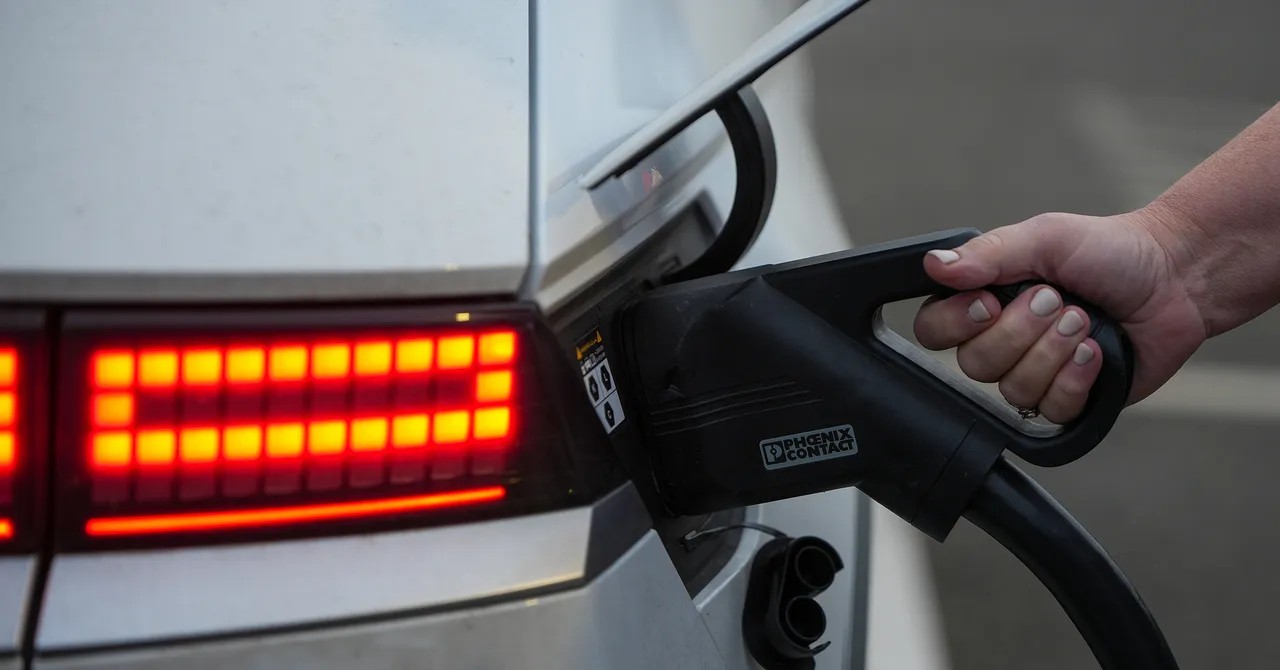
It plugs in to charge. It also sends power back out.
Electric vehicles possess a superpower you can’t see while driving past them on the highway. Vehicle-to-grid, or V2G technology, creates a revenue stream for drivers. Utilities pay to tap into their batteries when the grid demands peak energy.
Massachusetts is launching a pilot for this now.
A coalition of companies including Eversource, National Grid, Sunrun, and EnergyHub is testing the tech. The goal is coordination. Utilities are trying to manage hundreds, then thousands, eventually millions of connected EVs. Lessons from this early test could mainstream the technique. The result? A more reliable grid and cheaper electricity. You don’t even need an EV to benefit from that stability.
“It’s great to have Massachusetts stepping into this because these learnings allow this technology to scale,” Chip Silverman from Sunrun says.
How vehicle-to-grid actually works
Participants hook into ConnectedSolutions, an existing home battery program. During a “demand response” event—think sweltering heat waves—the EV battery helps the grid cope. Drivers get compensated. Just like solar panel owners.
It isn’t daily. It’s specific moments.
“It’s really a small number of hours per year,” Russell Vare of the Mobility House explains. “Not a daily discharge. Just during peak times.”
Why utilities need extra power storage
The challenges facing utilities are escalating. Overlapping issues.
Demand is growing. Data centers consume massive power. People switch to EVs. They swap gas furnaces for heat pumps. Yet utilities must ditch gas and coal for wind and solar. Renewable energy is intermittent. The wind doesn’t always blow. The sun doesn’t always shine.
Utilities need to bank energy. They’re building storage facilities. Using the Earth itself as a battery. But there’s another option.
Americans already struggle with skyrocketing energy prices. Shareholders profit. Customers pay for improvements like buried power lines to prevent wildfires. Transmission lines add more cost. It’s the price of a cleaner grid.
Unless some of that spending is avoidable.
V2G promises to make electricity cheaper. Participants need a bidirectional charger. A utility doesn’t need to reinvent its entire system. EV batteries are existing. Widespread. Reliable. Especially in summer when AC runs hard.
“It’s the cheapest cost of flexible energy storage available for the grid,” Vare notes.
Where V2G helps the most
Hotter planets mean more AC use. Health requires it. But appliances drain power. If that energy isn’t renewable, it causes more warming. Which increases AC demand. On and on.
In a V2G system, predictable vehicles shine. School buses. Municipal fleets. Their batteries are enormous stores of energy. But a typical EV battery has six times the capacity of a standard home backup unit.
Not all EVs support this yet. The Nissan Leaf is among the first models equipped. Bidirectional chargers will get cheaper. Hardware costs drop. Installation simplifies. Standards mature.
“We expect vehicle-to-grid to become dramatically more accessibility over the next several years,” EnergyHub president Seth Frader-Thompson states.
The aggregate power potential
Cars sit idle across cities. That adds up.
Only a fraction of owners need to participate for the program to support the grid. The more people opt in, the better. Broader base. Deeper resource.
“If you have a higher number of batteries in a virtual power plant, you use less energy from each individual battery,” Silverman says. “But collectively, when patched together, it comes out to a very large. That’s the magic.”
These early projects figure out the logistics. Apps let people specify typical vehicle use. Get to work, return home. The EV sends power back during peaks. Then charges as the night progresses.
Active managed charging pairs with this. It staggers the juice-up through the evening and morning. They aren’t all plugging in at 10 pm. That would spike demand dramatically.
V2G turns consumers into active participants. Power flows both ways. It doesn’t strain the grid to collapse. It helps save it.
So what happens when the grid is full of cars ready to give back?