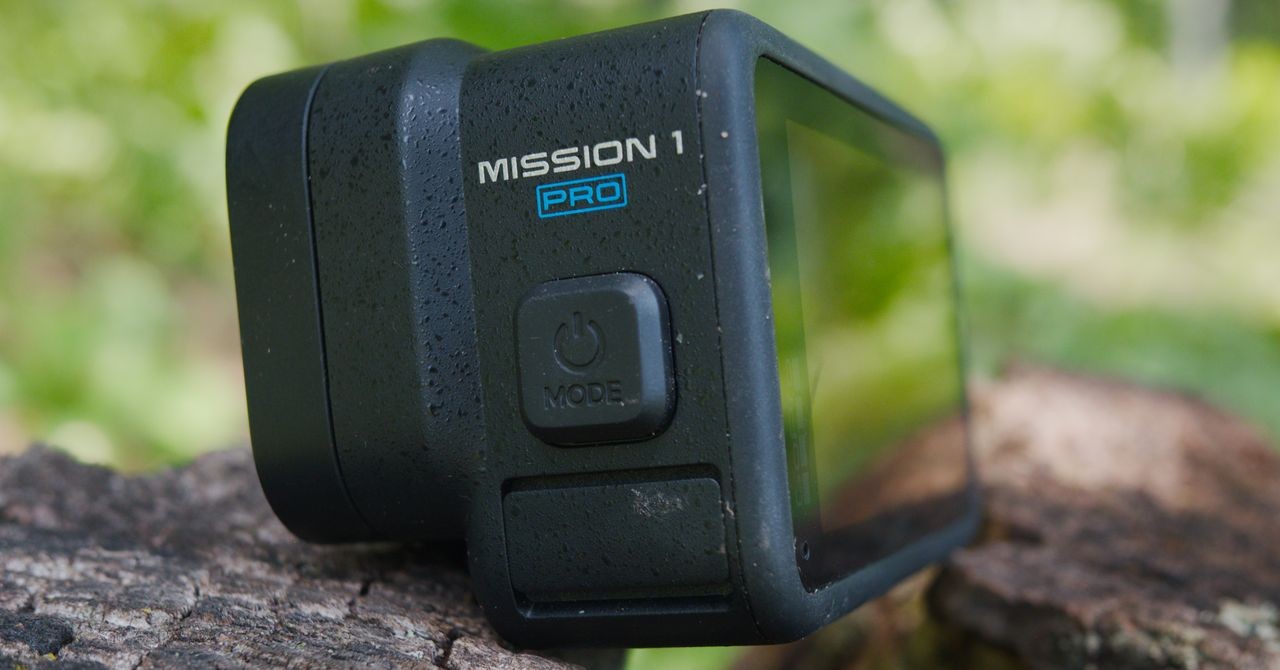
GoPro finally stopped playing with toy cameras.
Earlier this year, the company teased the Mission 1 series, promising the largest sensor ever put into an action cam. Now the hardware is here. After months of dragging it through salt water, mud, and wind, the verdict is clear. The GoPro Mission 1 Pro is the best action camera available today. It is also the most expensive one you can buy.
At $699, this isn’t a gift for the casual weekend hiker. It is a tool for people who treat footage like a product. The upside is undeniable: sharp 8K video, accurate colors, and low-light performance that actually works. The downside is the price tag and the learning curve.
Why choose the Mission 1 Pro over other GoPro models?
GoPro has always wanted to sit at the professional table. The Mission 1 is their ticket in. It bridges the gap between the indestructible Hero line and cinema-grade glass.
There are three cameras in this family. The entry-level Mission 1. The Pro model, which is what we tested. And the Mission 1 Pro ILS (Interchangeable Lens System). The ILS uses Micro Four Thirds lenses and targets filmmakers who need flexibility. The Pro targets adventurers who want cinema quality without the hassle of changing lenses.
The Pro is here. The ILS isn’t.
Physically, the Pro feels like a Hero 13 Black but with a personality shift. It is nearly the same size. The larger sensor required a bigger lens housing, so the camera is wider and front-heavy. You notice this weight when it is mounted on your helmet. Otherwise, it fits every standard mount.
The buttons are the first real improvement. They are larger, raised, and tactile. You can operate this camera wearing thick winter mittens. That is a first for GoPro.
How does the Mission 1 Pro handle low-light video recording?
Inside the box, the hardware has changed completely. The star of the show is the Type 1 sensor. Ignore the marketing confusion about “1-inch” sensors. This sensor measures 13.2 by 8.8 mm. It is massive for an action camera.
This size allows for true 8K recording at 60 frames per second. Even with HyperSmooth stabilization cropping the image by 10%, you still retain 8K resolution. You can shoot in 4:3 open gate at 30fps, a resolution that beats many dedicated mirrorless cameras.
Most people never need 8K. But here is the trick. 8K lets you crop and zoom in post-production while still exporting a sharp 4K file. With a 156-degree field of view, that extra resolution provides significant creative freedom.
The slow-motion capabilities are equally aggressive.
– 4K video at 24 fps
– 4K at 120 fps
– 4K at 240 fps
– 1080p at 960 fps
That last option is wild. 960 fps gives you stunning slow-mo bursts. The catch is duration. You can only shoot ten-second clips at this speed. For YouTube and social media, it is enough.
Powering this is the GP3 processor. It handles the high frame rates, the new low-light modes, and subject tracking. It also powers the GP-Log2 format. This is GoPro’s updated log profile. It captures more dynamic range than previous versions, allowing for cinematic color grading.
If you don’t want to grade footage, the default colors are excellent. In fact, they are more natural than the Hero 13 Black. You can use the Pro out of the box and get great results. But to get the most out of it, you should shoot GP-Log.
Is the GoPro Mission 1 Pro worth the high price tag?
Yes, if you understand what you are buying.
The slow-motion footage looks like it came from a cinema camera, not an action cam. The 2X digital zoom works at 240fps, which opens up composition options the Hero line can’t touch. When color-graded correctly, the footage mixes seamlessly with pro gear.
Low-light performance is the killer feature. Older GoPros struggled here. The Mission 1 Pro handles twilight beautifully. The new Low Light mode applies restraint, avoiding the noisy artifacts common in previous models. Without log grading, it rivals the Insta360 Ace Pro 2. With GP-Log and grading, it beats them all.
Battery life is strong. I got three hours shooting 4K at 24fps. Charging is fast. Eighty percent in 20 minutes. Fully charged in just over 30. The battery is larger than the Hero 13’s, but it is backwards compatible. If you have extra Hero 13 batteries, you can use them here.
Audio is improved with additional mics. The rear screen is bigger. The menus are deeper. GoPro Lab even offers alternative firmware that pushes video bitrate to 300 Mbps.
But there are trade-offs.
What are the drawbacks of the Mission 1 Pro camera?
To get the promised quality, you must edit. The raw files are large. The log footage looks flat. If you want a camera that looks good immediately after pressing stop, buy the Hero 13. It produces sharp, oversharpened video right out of the box.
The Mission 1 Pro requires work.
There is occasional jitter in low light when using HyperSmooth. If you shoot past blue hour, highlights may dance around. The onboard processor hits its limit. The solution is simple: turn off HyperSmooth and use a physical gimbal.
The weight is another factor. Some users will find it cumbersome. I didn’t. But it is heavier than what most people carry now.
There is also no 5.3K resolution option. The camera jumps from 4K to 8K. For daily use, 8K creates massive files that are unnecessary. I missed the middle ground.
Which action camera should you buy in 2024?
You do not need the Mission 1 Pro to shoot great video. GoPro Creative Director Abe Kislevitz made stunning films with a GoPro Hero 9 years ago. Skill matters more than sensors.
But if you want the absolute best technology available, this is it. The Mission 1 Pro delivers image quality that no other action camera matches. If the budget allows, get the Pro model for the slow-motion capabilities. If you don’t need 960 fps, the standard Mission 1 saves money.
For pros, wait for the ILS model. The interchangeable lens system is coming later this year and may change the game again. Until then, the Pro is the peak.