The Mitsubishi keiretsu is not a single company. It is a loose, decentralized network of independent firms that emerged from the ashes of a massive pre-war business empire. If you are trying to understand how large Japanese conglomerates actually operate, the Mitsubishi story offers a clear look at how corporate governance shifted from centralized family control to informal executive coordination.
From Trading Firm to Military Powerhouse
The roots go back to 1873. Iwasaki Yatarō purchased a government-operated shipping company in 1871 and used it to found Mitsubishi Commercial Company (Mitsubishi Shōkai). With significant financial assistance from the Japanese government to promote commerce and industry, the firm quickly became the country’s largest shipping concern.
Iwasaki did not stop at shipping. He diversified aggressively into mining, finance, warehousing, shipbuilding, real estate, and banking. By 1893, these interests were consolidated into a family-owned holding company, Mitsubishi, Ltd. (Mitsubishi Gōshi Kaisha).
During World War I, the group expanded further. Subsidiencies were created or absorbed, covering iron and steel, insurance, oil refining, aircraft production, and chemicals. By the 1930s, Mitsubishi had become the second-largest zaibatsu in Japan.
The War Years and the Post-War Breakup
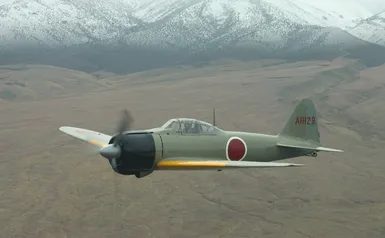
Mitsubishi’s size exploded during the 1930s and ’40s because it became a major military contractor. The group built many of Japan’s warships and the A6M2 Zero fighter. By the end of World War II, the conglomerate controlled roughly 200 companies.
After Japan’s defeat, U.S. occupation authorities broke up the Mitsubishi zaibatsu. Mitsubishi, Ltd., was dissolved, and the stock of former subsidiaries was sold to the public.
This was a deliberate dismantling of the old structure. The central, family-controlled holding company was removed to prevent the concentration of economic power.
The Keiretsu Model: Coordination Without Control
When the occupation ended in 1952, the new grouping was fundamentally different from the old zaibatsu. There was no longer a single parent company dictating strategy. Instead, the group functioned as a keiretsu.
This structure relies on:
– Informal policy coordination among company presidents
– Financial interdependency among the corporations
– Shared interests without direct ownership of one another’s stock
This is a critical distinction for investors and analysts. A zaibatsu is a hierarchy. A keiretsu is a web.
Modern Mitsubishi Group Structure
Today, the Mitsubishi Group consists of hundreds of group companies. Not all of them use the Mitsubishi name. Major entities include Nikon Corporation, Kirin Brewery, and Asahi Glass. These firms are large multinationals, mostly based in Tokyo, with overseas offices and subsidiaries. Many engage in joint ventures with foreign partners.
In the United States, Mitsubishi International Corporation (founded in 1954) plays a specific role. It operates as a sōgō shōsha (general trading company) and handles finance and project management for the Tokyo-based Mitsubishi Corporation. This separation between the trading arm and the parent entity illustrates how the group maintains functional specialization while avoiding the centralized control that characterized the pre-war era.
Understanding this shift from a monolithic zaibatsu to a collaborative keiretsu is essential for anyone analyzing Japanese business strategy. The group’s strength lies in its flexibility and networked relationships, not in a single top-down command structure. Whether that model remains sustainable in a globalized, digitally driven economy is a question worth watching.