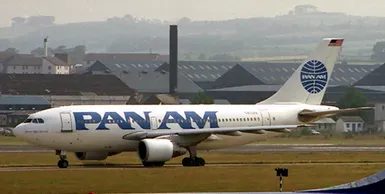
Pan American World Airways didn’t just disappear. It imploded.
The airline that once stitched together the Western Hemisphere collapsed on December 4, 1991. Before that final day, Pan Am was the dominant force in international travel for much of the 20th century. Its reach spanned from North and South America to Europe, Asia, Africa, and the Middle East.
But by the 1980s, the situation had deteriorated rapidly. A holding company, Pan Am Corporation, took the helm in 1984. The financial distress wasn’t a sudden crash. It was a slow bleed. Routes were slashed. Services were reduced. The company had no choice but to stop operations.
How Juan Trippe Built the First Global Carrier
The story starts in 1927. Juan Terry Trippe, a former World War I naval aviator, incorporated the company. He didn’t start with passengers. He started with mail.
Trippe secured a contract to fly between Key West, Florida, and Havana, Cuba. The first passenger service between those two cities launched the following year. The early days were gritty. Charles A. Lindbergh was one of the pilots. He surveyed new routes while flying for the nascent airline.
By the end of 1929, Pan American controlled a massive network. It covered 12,000 miles. The routes linked the United States with Cuba, Haiti, the Dominican Republic, Puerto Rico, Mexico, British Honduras (now Belize), Panama, and Colombia.
Pan American inaugurated the first transpacific flights in 1936, with the famous China Clipper.
The expansion was aggressive. Pan Am flew the first transpacific route from San Francisco to Manila using the China Clipper in 1936. Three years later, in 1939, it launched the first transatlantic flights from New York City to Lisbon using the Yankee Clipper. The first round-the-world flights followed in 1947, traveling eastbound from New York back to New York.
In the immediate post-World War II era, Pan American was arguably the leading international air carrier in the world. It didn’t wait for competitors to catch up. In the mid-1950s, Pan American acquired Boeing’s very first jetliner, the B-707. It led the way into jet travel.
The National Airlines Acquisition and Hidden Debt
The 1960s and ’70s brought financial reverses. Despite the prestige, the balance sheets were shaky. The company sought regrowth through acquisition.
In 1980, Pan American bought National Airlines. This purchase secured an extensive network of routes along the eastern U.S. seaboard and points west.
National Airlines had its own history. It was formed in 1929 by George Theodore Baker (1900–1963). Baker began the National Airlines Air Taxi System in Chicago. He moved the company to Florida in 1934. It was reincorporated as National Airlines, Inc., in 1937. The company became a major player in 1944 when it won the lucrative tourist route between New York and Florida.
Pan Am also operated Pan Am Express, Inc., handling connecting flights in Canada, the United States, and Europe. It ran Pan Am Shuttle, Inc., which served the high-traffic corridor between Boston, New York City, and Washington, D.C. These were lucrative operations. But the acquisition of National didn’t fix the underlying debt.
Selling Off the Crown Jewels
Pan American remained in financial distress throughout the 1980s. The strategy shifted from growth to survival. The company began selling off its most valuable assets.
In 1986, Pan Am sold its fast-growing and lucrative Asian and South Pacific routes to United Airlines. This was a strategic retreat. The Asian market was a key growth area. Selling it provided immediate cash but removed a major future revenue stream.
The decline accelerated in the early 1990s.
In November 1991, still in trouble, Pan Am completed the sale of its transatlantic, continental European, Middle Eastern, and Asian routes to Delta Air Lines. These were the core international routes that defined the brand. Selling them stripped Pan Am of its primary identity.
Bankruptcy and Closure
The attempts at survival failed. The financial model was broken.
Pan Am filed for bankruptcy in January 1991. The clock was ticking. Operations were frozen. Routes were canceled. The brand, once synonymous with American prestige, was dismantled piece by piece.
By December 1991, the company