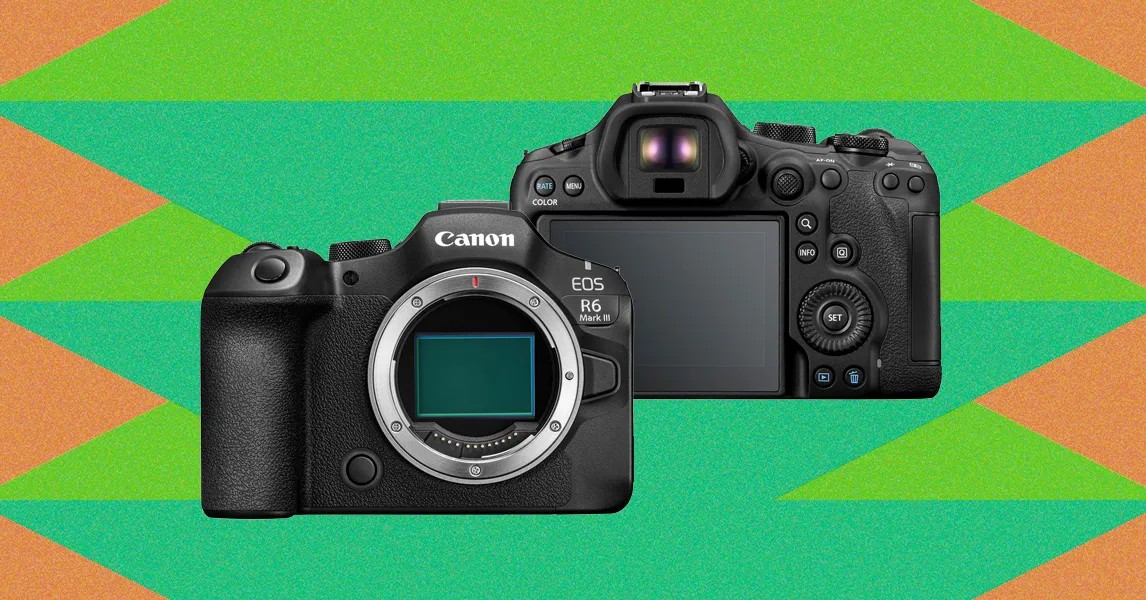
Canon’s R6 line used to mean “budget full-frame.” Now, it means “wait, is this entry-level?” The EOS R6 Mark III arrived late last year with a promise that feels suspiciously like a threat to the pro crowd. Same price bracket. Fewer compromises.
The body looks familiar. Same box. Same curves. But open it up? Completely different beast. You get CFexpress support, sticker autofocus that actually sticks, and video specs that make your old rig look quaint. I spent weeks trading my daily driver— the Mark II— for the new kid. Here is what happened.
Pixels With Purpose
I own the Mark II. I’ve shot weddings, portraits, commercial work. Thousands of files. The limit was always the resolution. 24 megapixels. Fine. But when you need to crop tight on a flower or resize a portrait for print? You start begging for more pixels.
The Mark III answers that prayer.
32.5 megapixels. That’s a 34% bump. It uses the stabilized full-frame chip from the video-centric EOS C50. Usually, packing more sensors into the same physical space hurts high ISO performance. Grain sets in earlier. The sky gets noisy. Not here. At least, not noticeably. The “sweet spot” is real. 32.5MP is just enough to keep detail without sacrificing low light. I couldn’t see the difference in noise, frankly. And if I did, Photoshop’s Denoise exists for a reason. We don’t worship ISO invariance the same way we did ten years ago.
Then there are the card slots. Two SDs on the Mark II? Gone. You now have one CFexpress Type B and one SD slot (up to SDXC UHII). Why? Speed. The processor is still the Digic X, identical to the Mark II. But the CFexpress lane makes the camera feel faster. Responsive. It pushes the video ceiling to 7K at 60fps. Compare that to the 4K 50fps limit of the last model. Huge leap.
A few other physical tweaks matter. Full-size HDMI port. Video people screamed for this. Finally got it. USB-C. Headphone jack. Mic jack. All good. The design itself? Mostly the same. The ergonomic grip works. The mode dial lost the Creative Filters. Good riddance. It now has S&F for slow motion playback. Useful? Yes. Clutter gone? Yes.
Canon missed the dial lock though. It still slides around.
Big peeve. My waist knocks the dial in dual-camera rigs. I’m reaching for a wedding shot, trying to capture a first kiss or confetti explosion, and suddenly I’m in bulb mode. Or macro. Or whatever. The R6 Mark III didn’t fix this. It should have been the priority.
Screens? Still disappointing. The LCD tilts. It flips out. But it’s not four-axis like the Sony options. And there’s still no top LCD plate. No quick glance at shutter speed while your eyes stay on the scene. Canon reserves those luxury touches for the R1, R5, R3. The rest of us? We check the EVF or guess.
Fast But Fickle
The Mark II wasn’t slow. The Mark III is impatient.
Paper specs say the same burst rate. 12fps mechanical. 40fps electronic. But that’s misleading. The new sensor handles the load differently. More importantly, the Pre-Continuous Capture gets a major boost. It can buffer 20 full-res RAW shots half a second before you hit the shutter.
Imagine a bird launching off a branch. The split-second blur of takeoff. That’s gone forever. Unless you have this feature. Suddenly, it’s just a matter of pressing the button when the bird is near. The camera caught the rest. Sports photographers. Wildlife hunters. This feature changes everything. Assigning it to the M-Fn button makes switching on and off easier, even if the button feels a bit… spongy. Less click. More silence. Wildlife shooters will appreciate the stealth.
Autofocus got a software tweak, mostly. Dual Pixel AF II returns with better subject detection logic. But there is no Digic Accelerator here. Which means no Action Priority AF. The camera isn’t quite built for chaotic, fast-paced sports like basketball or soccer where the ref moves as fast as the ball. It might miss the mark there.
But for most of us, it’s brilliant.
You get Nominate Register People Priority. Sounds nerdy. Is incredibly practical. You register specific faces. The camera prioritizes them in a crowd. Shooting a wedding? You lock focus on the bride and groom. Chaos in the background? Doesn’t matter. They stay tack sharp. It tracks people, cars, planes, cats. It works down to -6.5 EV. I tested it in dim rooms, bright sunlight, shadows. I never lost focus.
There is one caveat. Slower lenses.
Try using an aperture wider than f/7 with a long zoom? Or stick to slower glass like the 800mm f11? The autofocus hesitates. Just slightly. It’s likely the lens optics limiting contrast detection. If you use f2.8 or decent light? Problem vanishes. For Sunday league soccer moms, this feature will get you the photo you actually wanted. For the pros covering the NFL? Maybe look elsewhere.
Who Is It Actually Fighting?
The market for advanced entry-level cameras is crowded. Canon isn’t alone in the arena.
Sony A7V : The direct rival. It has 33 megapixels. Similar resolution. Its sensor is stacked, reducing rolling shutter effects. Better for fast pans. The lens ecosystem? Massive. Sigma, Tamron, others all make AF lenses for Sony E-mount. Canon RF is walled. Still is. It’s frustrating. If lens variety is your religion, Sony wins. The four-axis screen also lures people away from Canon’s static setup.
Nikon Z6 III : Lower resolution at 24.5 megapixels. But serious video chops. 6K ProRes RAW support. If you are a videographer who does a few photos, Nikon makes the stronger pitch here.
Panasonic S1 II : It has a built-in cooling fan. Why does that matter? You can shoot long takes of high-resolution video without the camera shutting itself down from overheating. It shoots 5.7K RAW. Supports custom LUTs. It is a hybrid beast tilted heavily toward moving pictures.
And let’s not forget Canon’s own family tree. The C50 camera is essentially a video-optimized R6 Mark III with a fan. If video is 80% of your workflow? Buy the C50. If you shoot stills even a little more than you shoot video? Stick with the R6 III. Budget-conscious users might still look at the EOS R8, or even pick up a used R6 Mark II while stock lasts. The Mark II isn’t dead. It’s just no longer the newest trick in town.
The Verdict
It is hard to argue with what you get.
The R6 Mark III does almost everything right. Faster media. Smarter AF. More pixels without the penalty. A better video engine. The mode dial slips. The screens haven’t caught up to competitors. It lacks the specialized AF processor for high-action sports. These aren’t dealbreakers for most.
For those looking for one body to do it all, the options are narrowing. The gap between pro and consumer has closed again. Canon just made sure to stand right in the middle, smiling, asking you for credit.
You decide if you’re willing to pay it.