
Work is the engine of human progress. It is a defined set of activities aimed at a specific goal: solving problems, producing goods, or delivering services that meet human needs. But the concept is far more complex than a 9-to-5 paycheck. It is inherent to our social and personal development. Through work, we transform our environment, generate value, and contribute to the evolution of our communities.
The etymology of the word itself is dark. The origin lies in the Latin term tripalĭum. This was an instrument of torture made of three sticks used in ancient Rome. Over centuries, the meaning shifted. It came to refer to any painful physical effort, particularly in agriculture, before expanding to encompass all productive activity.
Despite these harsh origins, work allows humans to conquer their space, earn respect, and build self-esteem. It drives professional fulfillment and societal contribution. However, the definition changes depending on where you look. Economists, physicists, and philosophers all have different lenses.
Defining Work in Economic Terms
From an economic perspective, work definition centers on the time and effort a person dedicates to productive activities. The goal is straightforward: generate goods or provide services.
Economists typically categorize this into two main types:
- Physical work : This involves manual or bodily effort. Think agriculture, construction, or manufacturing industries.
- Intellectual work : This relies on thought, creativity, and specialized knowledge. Examples include research, art, and programming.
The distinction matters because it shapes how we value labor in the market. Physical work is often measured by hours or output units. Intellectual work is frequently valued by innovation, efficiency, or unique skill sets. Both are essential for a functioning economy.
The Physics of Work: Energy in Motion
In physics, the concept is even more rigid. Here, work in physics is a scalar quantity that measures energy transfer. It occurs when a force is applied to an object, causing it to move.
This magnitude is represented by the letter W and is expressed in Joules (J). The calculation is simple but strict. It is the product of force and displacement.
W = F · d
The result can be positive or negative, which changes the nature of the energy transfer. For work to be positive, the force must act in the same direction as the displacement. If the force opposes the movement, the work is negative.
This leads to three specific classifications in mechanics:
- Null work : The result is zero. This happens if there is no displacement or if the force is perpendicular to the movement.
- Motor work : The force and displacement are in the same direction. Energy is added to the system.
- Resistive work : The force and displacement are in opposite directions. Energy is removed from the system.
Work vs. Employment: Are They the Same Thing?
Society often uses these terms interchangeably, but they are not. Work is the broad activity of producing value. Employment is a specific contractual relationship where labor is exchanged for wages.
You can have work without employment. Volunteerism, unpaid caregiving, and hobbyist creation all involve effort and value generation. They are not jobs in the legal or economic sense. Conversely, employment implies a structured commitment, often with legal protections and expectations.
Understanding this difference is key to navigating modern labor markets. As automation and the gig economy reshape how we earn, the line between “having a job” and “doing work” continues to blur. The definition you use depends on whether you are measuring human effort, economic output, or physical energy.
Hay una línea fina que separa lo que hacemos por necesidad o vocación de lo que hacemos por un sueldo. Trabajo es el acto físico o mental de realizar una tarea. No siempre implica dinero. Piensa en la crianza de los hijos, el cuidado de ancianos o la organización de una fiesta familiar. Son esfuerzos reales. Tienen valor. Pero nadie te deposita fondos en la cuenta por eso.
Esta distinción se vuelve politicamente relevante cuando algunos debates proponen pagar el trabajo doméstico. Argumentan que limpiar, cocinar y gestionar un hogar genera un impacto social positivo. Requiere múltiples tareas. Sin embargo, hoy no se considera empleo formal. No hay contrato. No hay nómina.
Empleo es más reciente. Surgió con la Revolución Industrial. Define una posición en una empresa o institución. Aquí, tu esfuerzo —físico o intelectual— se intercambia directamente por dinero. Es una relación contractual. Es remunerado.
La economía del freelancer
Si buscas autonomía, el trabajo autónomo o independiente aparece como una opción. No estás sujeto a las reglas de una única empresa. Eres un profesional libre.
La mayoría de estos trabajadores operan en actividades comerciales o de servicios. En el mercado global, se les conoce como freelancers.
“El freelancer no vende su tiempo a un jefe, vende resultados a múltiples clientes.”
Vive de proyectos. No de un salario fijo mensual. La incertidumbre es mayor. Lo mismo la libertad.
La era del teletrabajo
El teletrabajo ha redefinido dónde se realiza esa remuneración. Ya no es necesario estar físicamente presente en una oficina. La tecnología lo permite.
Esto borra la línea entre trabajo y vida personal. ¿Dónde termina la jornada laboral? ¿Empieza la vida familiar?
Para muchas empresas, es una forma de reducir costos de infraestructura. Para el empleado, puede significar ahorro en transporte y mayor flexibilidad. Pero también trae riesgos de desgaste emocional. La desconexión digital se vuelve difícil.
¿Por qué importa la distinción?
Confundir ambos conceptos lleva a errores financieros. Si tu trabajo no está remunerado, no cuenta para tu jubilación. No genera prestaciones sociales. No crea historial crediticio.
El empleo, en cambio, ofrece esa red de seguridad. A cambio, exige disponibilidad y, a menudo, renuncia a parte de tu tiempo libre.
La tendencia actual muestra un híbrido. Más personas buscan formas independientes de generar ingresos. Menos quieren ataduras tradicionales. Pero la pregunta clave sigue siendo: ¿tu esfuerzo genera riqueza para ti o para otro?
La respuesta define tu estabilidad.

Telework is exactly what it sounds like: work done outside the company’s physical office. Technology has pushed this model into the mainstream. For businesses, the appeal is straightforward. Overhead drops. Equipment costs shrink. Processes often become leaner. It’s a structural shift, not just a trend.
Why People Volunteer Without Pay
Volunteer work operates on a different currency. There is no paycheck. No hourly rate. Just the internal satisfaction of helping.
This labor fuels non-governmental organizations (NGOs) and non-profits. It’s common among university students looking to build resumes. But the scope is wider than that. You can find volunteers tackling environmental conservation. Rescuing abandoned animals. Supporting the elderly. Assisting vulnerable populations.
The trade-off is simple. You exchange time for purpose. No financial return, but tangible social impact.
The Mechanics of Teamwork
Teamwork is coordinated effort. A group moves toward a single goal. Roles are distributed. Tasks are shared. The result? Speed and efficiency that an individual rarely achieves alone.
It’s the backbone of organizational structure. It’s also why sports like soccer, basketball, and volleyball work. Everyone has a position. Everyone covers a gap. Without that coordination, the system collapses.
The Shift to Collaborative Work
Collaborative work is often confused with teamwork, but the distinction matters. While teamwork focuses on shared goals within a structured hierarchy, collaboration is more fluid. It’s about crossing boundaries. Sharing knowledge across departments. Breaking down silos.
In remote environments, collaboration tools replace the water cooler. Slack, Trello, and shared documents become the office. The challenge isn’t finding work. It’s ensuring visibility. How do you measure contribution when no one sees you sweat?
The line between working alone and working with others is blurring. Is it really a team if you never meet? Or is collaboration just a buzzword for asynchronous coordination? The answer depends on your output. And your patience.
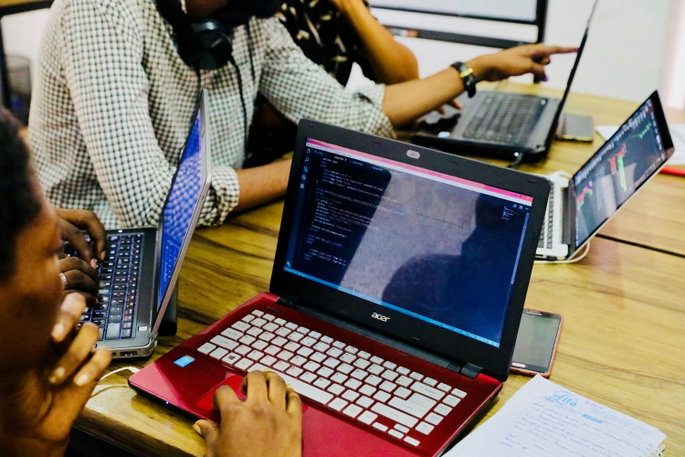
The mechanics of collaboration and planning
Collaborative work isn’t just people sitting in a room together. It’s a decentralized, simultaneous effort where experts pool their specific knowledge toward a single goal. There is no single “author” here. The work relies heavily on information and communication technologies (ICT) to bridge the gap between contributors.
To make that collaboration stick, you need a plan of work.
Think of it as the skeleton for any project. It’s a management tool that does three things: it prioritizes tasks, creates a timeline, and assigns responsibilities. Without it, decision-making is a guess. With it, you have a system. You define the objectives. You map the steps. It’s useful because it removes ambiguity from organizational structures.
Academic rigor and field realities
In higher education, the output is academic work. The goal isn’t just to pass a class. It’s to sharpen critical thinking and intellectual capacity. These tasks are often written submissions for teacher evaluation, though oral presentations before an audience are common too.
The formats vary:
– Tesis
– Monografías
– Articles or papers
– Informes
– Reseñas
– Ensayos
Then there is the messy reality of data collection: fieldwork.
This happens outside the lab. You go to where the phenomenon occurs. It’s the raw notes, sketches, photos, and samples gathered on the ground. It’s the backbone of natural and social science research. You can’t fake it in a vacuum. You have to be there.
Social work as systemic intervention
Social work is different. It’s a discipline aimed at social change. The focus is on resolving human relationship problems and strengthening individuals or groups to boost their overall well-being.
A social worker’s role is specific:
– Building networks between people and social organizations.
– Encouraging citizen participation.
– Guiding communities toward peaceful conflict resolution.
It’s not charity. It’s structural intervention.
The dark side of labor
Not all work is voluntary. Or fair.
Slave labor is forced, illegal, and often unpaid or grossly underpaid. The worker is exploited. Their rights are stripped. Historically, this relied on physical force and torture. Today, it persists in economically depressed zones. It’s a violation of basic human dignity, yet it still happens. Organizations and individuals are still reported for promoting this activity despite global prohibitions.
Child labor is equally problematic. It involves children and adolescents working below the legal minimum age defined by local laws. Poverty drives this. Kids work to survive or to keep their families afloat.
The International Labour Organization (OIT) defines it by two key harms:
1. It is dangerous, threatening the physical, mental, or moral integrity of the child.
2. It interferes with schooling. Either the child is forced to drop out, or the workload is so heavy they can’t attend class or complete assignments.
Labor Day: History and location
Labor Day (or International Workers’ Day) is a commemoration of the struggles and gains of the global labor movement. It’s celebrated on May 1st in most of the world.
The date honors the “Martyrs of Chicago.” These were workers killed in the US while protesting for a reduction in working hours.
There’s a geographic quirk here. The US, where the event originated, doesn’t celebrate on May 1st. They observe Labor Day on the first Monday of September. Different history. Different timing. Same recognition of labor’s value.
Why the discrepancy? It’s political. The May 1st date was chosen by the Second International in 1889 to honor the Haymarket affair. The US avoided it, likely to distance itself from the anarchist associations of that specific event. But that’s history. The work remains.