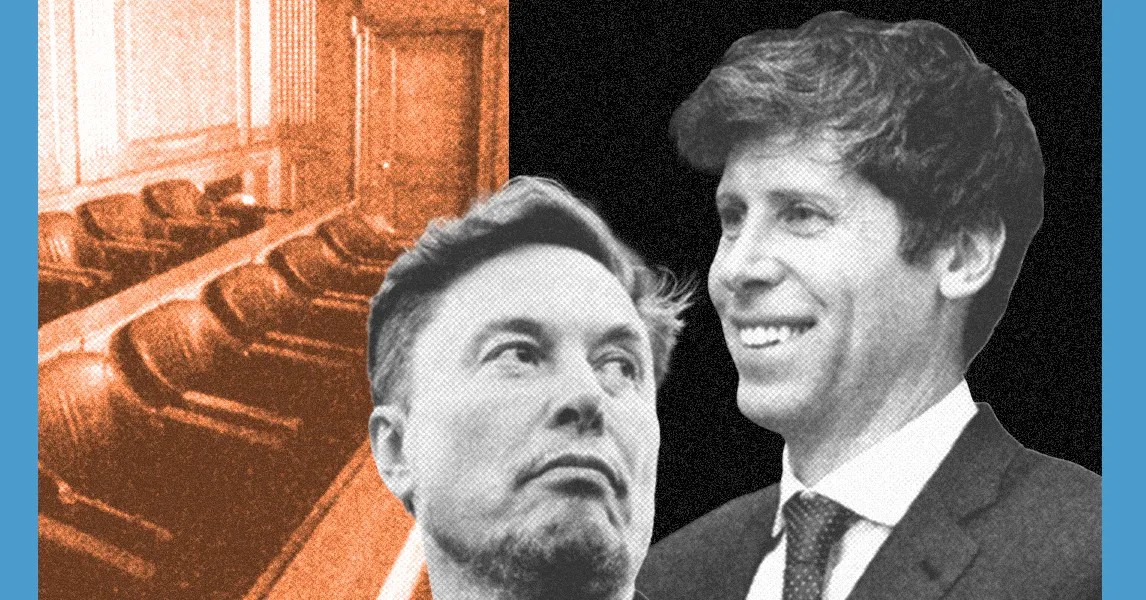
The legal battle between Elon Musk and OpenAI has officially entered its trial phase in Oakland, California. On Monday, a federal court began the complex process of selecting a jury to decide a case that sits at the intersection of corporate governance, billionaire egos, and the future of artificial intelligence.
The Jury Selection Challenge
Finding an impartial jury proved difficult due to the high profiles of the litigants. While OpenAI CEO Sam Altman and President Greg Brockman were present at the courthouse, Elon Musk was notably absent.
The selection process revealed a significant hurdle: public perception of the defendants. During questioning by Judge Yvonne Gonzalez Rogers and various attorneys, several potential jurors expressed negative views regarding Elon Musk and the broader implications of AI technology.
Despite these biases, the court proceeded with a diverse panel of nine jurors, including a psychiatrist, a painter, and a former Lockheed Martin employee. Only one juror was excused due to extreme prejudice against Musk. Judge Gonzalez Rogers noted that having negative feelings about a public figure does not necessarily disqualify a person from serving, provided they maintain judicial integrity.
“The reality is that many people don’t like him,” Judge Gonzalez Rogers remarked, suggesting that jurors can still remain fair despite personal opinions.
The Core of the Dispute
At the heart of this lawsuit is whether Sam Altman and other OpenAI leaders improperly shifted the company’s direction. Musk alleges that OpenAI abandoned its original mission as a non-profit dedicated to the public good in favor of a more profit-driven, closed model.
Key procedural details to note:
– The jury’s role is to establish the facts of the case.
– Their final verdict will be advisory ; Judge Gonzalez Rogers will make the ultimate legal determination.
A War of Words on Social Media
While the legal proceedings move slowly inside the courtroom, the battle is moving rapidly online. Both sides are actively attempting to shape public opinion:
- Elon Musk used his platform, X, to amplify a New Yorker investigation into Altman’s business conduct, a move seen by many as a strategic attempt to influence the trial’s narrative.
- OpenAI countered via its official newsroom account, characterizing Musk’s lawsuit as an attempt to undermine the development of artificial general intelligence (AGI) for the benefit of humanity.
- Protesters gathered outside the courthouse, advocating for a global pause on AI development.
The tension is so high that Judge Gonzalez Rogers has already warned both Musk and Altman to limit their social media activity to avoid further complicating the legal process.
What’s Next?
The trial enters its most critical phase on Tuesday, when lawyers from both sides will deliver opening statements. This will set the stage for the first witnesses to testify, as the court attempts to untangle the complex history of OpenAI’s transition from a non-profit mission to its current technological powerhouse status.
Conclusion: As the trial begins, the court faces the dual challenge of weighing complex corporate evidence while managing the intense public biases surrounding two of the world’s most influential tech figures.