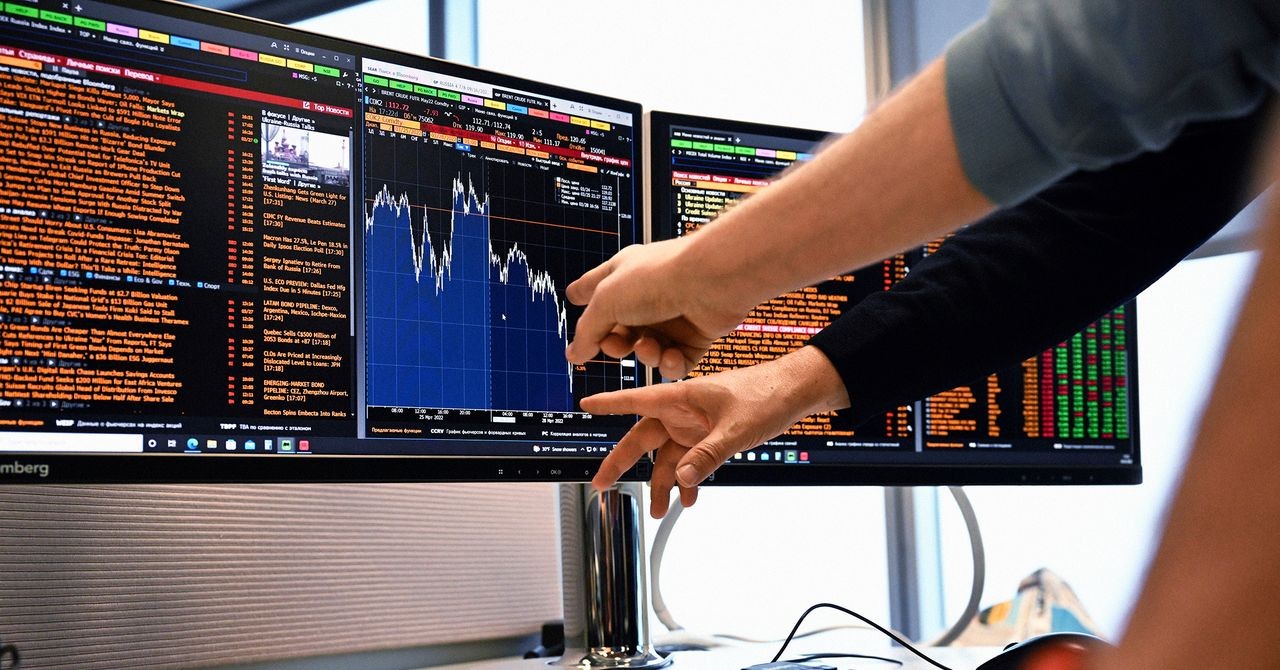
For decades, the Bloomberg Terminal has been the gold standard of financial intelligence—a complex, often intimidating tool that seasoned traders master through sheer persistence. However, as the sheer volume of global data explodes, the traditional method of manually navigating endless streams of numbers is reaching a breaking point.
To address this, Bloomberg is introducing ASKB (pronounced “ask-bee”), a generative AI-powered interface designed to transform how finance professionals interact with information.
The Problem: Data Overload and the “Information Gap”
The Bloomberg Terminal has evolved from a simple price ticker into a massive repository of global data, including weather forecasts, shipping logs, consumer spending, and private loan details. While this depth is a strength, it has created a new challenge: information fatigue.
Shawn Edwards, Bloomberg’s Chief Technology Officer, notes that the current system is becoming “untenable.” When data becomes too vast, even the most skilled professionals risk missing critical insights or spending too much time on manual retrieval rather than high-level analysis.
Enter ASKB: Moving from Data Points to Investment Theses
Unlike traditional search functions that require specific commands or data points, ASKB allows users to interact with the Terminal using natural language. This shifts the user’s role from a “data hunter” to a “strategic thinker.”
- Synthesizing Complex Questions: Instead of looking up individual oil prices and geopolitical news separately, a trader can ask: “How will the conflict in Iran and changing oil prices affect my specific portfolio?”
- Automating the “Legwork”: ASKB functions as an “agentic AI,” meaning it can perform multi-step workflows. It can be programmed to summarize earnings calls, compare company fundamentals against peers, and provide “bull and bear” cases automatically.
- The Goal of “Alpha”: In finance, “alpha” refers to the ability to beat the market. Bloomberg believes untapped alpha is hidden within the noise of massive datasets; ASKB is designed to surface these connections quickly.
Addressing the Risks: Hallucinations and the Human Element
The integration of Large Language Models (LLMs) into mission-critical finance brings significant risks, most notably “hallucinations” —where AI generates false or nonsensical information. Bloomberg is tackling this through a multi-layered validation process:
- Fact-Checking Summaries: Ensuring every claim in a summary is directly supported by the source text.
- Semantic Checks: Verifying that the AI hasn’t inverted meanings (e.g., confusing a “rise” with a “fall”).
- Citation Transparency: Rather than acting as a “black box,” the system is designed to drive users back to the original source, ensuring they can verify the data themselves.
The Impact on the Workforce
The rise of AI in finance raises a critical question regarding the next generation of professionals. If AI can perform the tasks traditionally assigned to junior analysts—such as synthesizing reports and gathering fundamentals—how will new analysts learn the “craft” of finance? Edwards admits that while the technology is powerful, it does not replace the need for a deep, rooted understanding of the markets.
The Future of the Interface
Bloomberg does not view ASKB as a mere add-on, but as the new primary interface for the Terminal. While traditional graphical user interfaces (GUIs) and mouse-driven navigation will remain, the starting point for most workflows will be conversational.
Furthermore, Bloomberg is positioning itself against the rise of “vibe coding” and cheaper, DIY alternatives. While lightweight coding might work for casual tasks, Bloomberg argues that mission-critical decision-making requires the rigorous, validated data ecosystem that only a specialized terminal can provide.
Conclusion: Bloomberg is pivoting from a tool of manual data retrieval to one of automated synthesis. By integrating generative AI, the company aims to help professionals navigate an overwhelming sea of information, though the ultimate success of the tool will depend on whether users can maintain critical skepticism toward AI-generated insights.