To understand why the Great Depression of 1929 was so severe, we need to look back. Especially after the First World War. The war was not just a redrawing of the map. The way it shifts economic power creates a fragile world system. Before 1914, Europe was the factory of the world. After 1918, the production capacity was distributed elsewhere. Developed countries such as the United States sold goods abroad and collected profits. However, this wealth has a dark side.
As industrial production increased in the 1920s, agricultural production also increased. More food means lower prices. Farmers’ incomes in developing countries have collapsed. They lost the economic growth that benefited urban industrial workers. This imbalance causes a wider collapse.
Monopolies and weak regulation in the US economy
The United States is at the center of a crisis whose internal structures have weakened. World War I forced American small businesses to merge in order to survive. As a result, a wave of consolidation occurred. By 1929, just 200 holding companies controlled more than 50 percent of the U.S. economy.
This concentration of wealth was dangerous. If a major asset goes bankrupt, it doesn’t just hurt the industry; This shakes the entire national economy.
Regulatory oversight was equally weak. Laws governing banks and corporations were outdated and insufficient. Shareholders were often kept in the dark. There is little transparency, there is no actual auditing and there is little investor protection. This system is based on trust in institutions that are not ready to deal with stress.
Export surplus and speculative bubble
From 1924 to 1929, the United States continued to run a trade surplus. The United States became the largest creditor country in the world, offering loans to other countries. Domestic growth industries such as automotive, construction and electric power are flourishing. Demand for these products was fierce.
This demand fueled the stock market. But it wasn’t demand based on long-term value. It was speculative. Investors buy shares expecting a rapid increase in value, and the price of the share clearly exceeds the actual value. The market became a house of cards.
When other countries are unable to pay back US-backed loans, the credit chain is broken. Exhausted by international lending and domestic speculation, the US economy began to decline.
Global feedback loop: UK and Germany
This crisis is not just an American problem. It spreads through global financial connections. In Britain, the pound sterling became overvalued. This made British exports expensive and uncompetitive. Trade volumes dropped, and the economy deteriorated further.
In Germany, the situation is even worse. The country bears the burden of war reparations. To pay them, the government printed money without backing. The result was hyperinflation. Savings were wiped out. Social stability shattered.
Meanwhile, US policymakers hesitated. They failed to take timely and effective actions to stabilize the market or increase liquidity. Because of their inaction, the recession turned into a depression.
The Human and Economic Toll
The depression hit hardest in industrialized cities. Businesses dependent on manufacturing and construction in city centers collapsed overnight. Mining has been particularly hard hit. When the factories were closed, the demand for coal and metals disappeared.
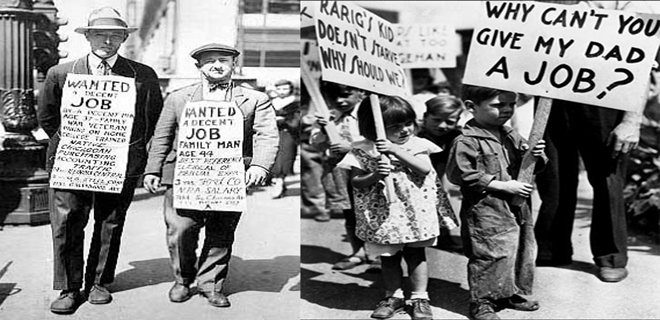
The numbers are astounding. World production fell by 42 percent. World trade has shrunk by 65 percent. Globally, the number of unemployed is 50 million. These are not just statistics. These are families who have been evicted, lines for aid stretch for miles, and hopes dashed.
The accident of 1929 did not happen by chance. It was the result of war debt, agricultural depression, corporate monopolies, lax regulation, speculative bubbles, and global economic interdependence. When the US market falls, so do other markets around the world. lesson? economic
The Crash That Broke the Market
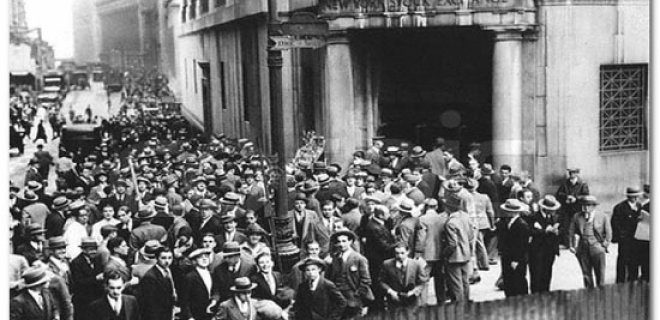
The New York Stock Exchange had been riding a wave of relentless growth and has an incredibly high P/E ratio. This illusion was shattered on October 3, 1929. The upward trajectory stalled. Within days, the value of the shares of several large holding companies began to decline.
By October 21, panic had spread around the world. Foreign investors sold their shares and fled the sinking ship. The decline accelerated and the correction turns into a free fall. Then came the day history remembers with dread. Black Thursday, October 24, 1929. The market didn’t just drop. It fell to the floor.
The fallout was immediate and brutal. Banks failed at an alarming rate. life savings evaporated overnight, leaving only debt and despair.
However, the story does not end with the display of share prices.
Survival in the Aftermath
What happened next was stranger and sadder than the financial collapse itself. Losing their cash and on the brink of starvation, Americans reverted to their primitive instincts.
They turned to the earth. Families began to grow vegetables and fruits not for profit, but to survive. They sold what little they had left to scrape together enough food.
the modern economy collapsed because the money supply practically disappeared from the market. People couldn’t pay for basic needs. So they returned to barter, the oldest form of commerce known to mankind.
The market didn’t just crash. it disappeared. Cash became worthless paper.
A barter economy replaced the dollar. What could you trade for a loaf of bread? Maybe shoes. Maybe a hour of labor. The abstract concept of “value” becomes concrete, immediate and demanding.
This was the reality in the early days of the Great Depression. Not just a graph going down on a wall. But a return to a time before checks, survival depended on what you could grow, create and trade.
Mobilization of national industry during the economic crisis
When economic storms hit, the strategy often shifts from global integration to strengthening the domestic front. In Turkey, this means that citizens are encouraged to tighten up and prioritize local products. This is a defensive financial strategy that aims to keep capital within limits when external markets are volatile.
On April 4, 1929, this crisis reached its peak. On that day, Istanbul University organized a meeting with the topic of promotion and protection of domestic products. This is more than just a lecture. This is a mobilization event. Young people did not gather there to study economics, but to take an oath. They promised to use Turkish-made products and change consumer behavior to patriotic behavior.
Why do they want to swear an oath? Because habits are hard to break. When the economy is good, imported goods usually have a better reputation or are cheaper. In a crisis situation, changing this inertia requires more than logic. It requires mental commitment.
Structure is needed so that this burst of initial enthusiasm becomes a continuous movement. Clubs were founded to spread student energy far and wide. Enter the National Economy and Savings Society. The organization led by Kazım Özalp started with a clear mission to make the use of local products the norm and not the exception.
Ozalp understands that the country’s economic security depends on consumer discipline. Savings reduce dependence on foreign loans. Domestic production reduces vulnerability to global supply disruptions. The association’s task is to narrow the gap between the government’s policy and public activities.
“The country’s industry will not survive if it is abandoned at the cash register.”
This is not isolationism in itself. It’s about durability. By encouraging saving and domestic consumption, the state tried to insulate the economy from the worst effects of the Great Depression. The results vary, but the goal is clear: building a financial firewall.
The association’s efforts laid the foundation for later industrial policy. These show that consumer sentiment can drive national goals. For decades, this approach has shaped the way Turkey sees its relationship with the global market. It created a tension between openness and independence that still exists today.
Is it effective? Partly. It created a sense of economic nationalism. This encouraged early local production. But it also limits competition. Consumers pay higher prices because they have less choice. The alternative is security for efficiency.
The legacy of the National Economic Savings Association is still present in Turkey’s industrial strategy. It is strongly believed that domestic production is a matter of national pride. So is the tension between protecting local industry and embracing global trade.
Today, the emergence of new crises raises the same questions. How much protection is too much? Can the domestic industry succeed without competition? The 1929 response provided a lesson, but it was not a plan. The economy is changing. Human behavior adapts. But the core dilemma of balance and security remains the same.