


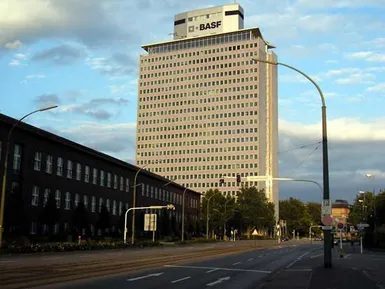
BASF is not just a factory. It is a sprawling industrial organism that has been breathing chemicals into the global economy since 1865. Headquartered in Ludwigshafen am Rhein, Germany, the company operates in roughly 30 countries. Its footprint is massive. You will find its products in everything from the synthetic fibers in your socks to the plastics in your car dashboard.
The origins are humble, almost ironic for a chemical giant. Friedrich Engelhorn, a former goldsmith, started the business in Mannheim. He called it Badische Anilin- & Soda-Fabrik, or the Baden Aniline & Soda Factory. He was one of the first to produce a full range of chemicals from basic materials. Dyes were the initial focus. Coal-tar dyes. Engelhorn understood that if you control the ingredients, you control the finished product.
Then came the war. And the mergers.
Between 1925 and 1945, BASF was swallowed by IG Farben. This was the world’s largest chemical concern at the time. It was a monster of an industrial complex, deeply entangled with the machinery of the Third Reich. When the Allies dissolved IG Farben in 1945, the pieces were scattered. BASF was refounded in 1952 as one of the three successor firms. It had to rebuild. It had to redefine itself.
The name changed too. The long, descriptive German title was dropped. In 1973, it became BASF Aktiengesellschaft. The shift was more than cosmetic. It signaled a move toward a modern, global corporate identity.
Today, the scope is staggering. BASF produces oil and natural gas. It makes fertilizers. It manufactures synthetic fibers, dyes, pigments, potash, and salt. The list goes on. Inks. Printing accessories. Electronic recording materials. Cosmetic bases. Pharmaceuticals. The company does not just make one thing well. It makes almost everything that requires chemistry.
Headquarters remain in Ludwigshafen, across the Rhine from the original Mannheim site. The move happened in 1919. The location has since grown into a city unto itself, centered around the plant.
Is there a risk in such diversification? Perhaps. Complex supply chains are vulnerable. Regulatory scrutiny on chemical manufacturing is intensifying. But the sheer scale of BASF’s operation suggests a different strategy. It is about indispensability. When you need a specific polymer or a high-grade pigment, you do not look for a specialist. You look at the giant.
The company’s history is a study in survival. It survived the collapse of an empire. It survived the breakup of a monopoly. It survived the shifting tides of global trade. Now it sits in Ludwigshafen, producing the invisible infrastructure of modern life. One molecule at a time.


