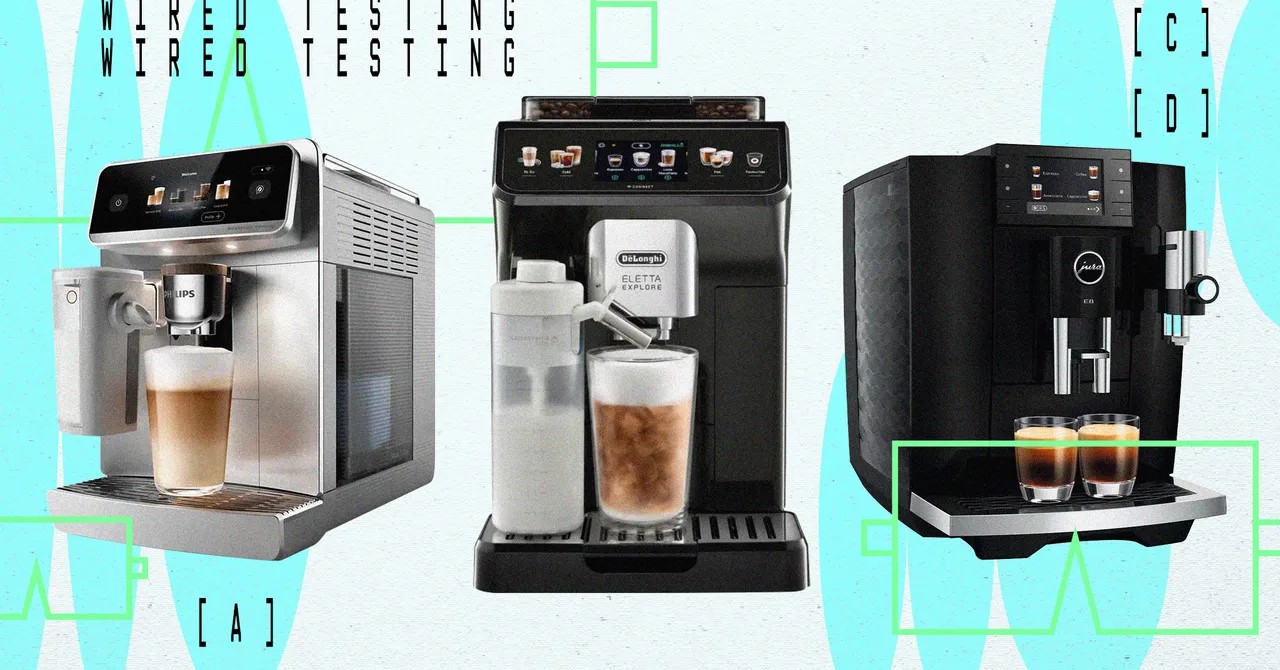
Marketing promises that fully automatic coffee machines can deliver café-quality drinks at the touch of a button. But when WIRED put four top-tier bean-to-cup machines to the test, the results challenged that narrative. In a blind taste test conducted by specialty coffee experts, price and brand reputation did not guarantee superior flavor. In fact, the most expensive machine performed the worst, while a more affordable option emerged as the clear winner.
This experiment wasn’t about usability, app interfaces, or cleaning ease. It was strictly about the quality of the brew. The findings suggest a critical trade-off in modern home appliances: convenience often comes at the cost of nuance. For the average consumer, these machines offer consistency and ease, but for those seeking authentic, barista-grade flavor, the results were merely “good approximations” rather than perfection.
The Experts and the Beans
To ensure an unbiased evaluation, WIRED enlisted Adam Cozens, co-founder of the UK specialty coffee brand Perky Blenders, and his business manager, Calum Hunt. With a background in running multiple cafés and supplying over 100 retail partners, they possess an intimate understanding of flavor profiles.
The testers used their own Forest Blend beans, known for notes of dark chocolate, molasses, and walnut, with a creamy body and low acidity. Because the experts knew exactly how these beans should taste, they were uniquely qualified to judge which machine extracted the most accurate flavor profile.
The Methodology: Latte and Espresso
The test focused on two staple drinks that reveal different mechanical strengths:
* The Espresso: Tests extraction quality, pressure consistency, and flavor intensity.
* The Latte: Evaluates milk steaming, frothing texture, and temperature control.
Both experts were blindfolded and presented with samples labeled A through D. They assessed each drink on crema, temperature, milk texture, extraction, and overall flavor. The machines tested were:
1. Terra Kaffe TK-02 (Machine A)
2. Jura E8 (Machine B)
3. De’Longhi Eletta Explore (Machine C)
4. Philips Café Aromis 8000 (Machine D)
The Results: Convenience vs. Quality
🥇 The Winner: Philips Café Aromis 8000
Surprisingly, the Philips machine took first place for both latte and espresso, despite having the lowest price tag of the group.
- Latte: While the presentation was unusual (with a distinct brown foam layer), the flavor was spot-on. Hunt noted it had the right balance of chocolate-nutty notes and sweetness, with coffee and milk blended seamlessly.
- Espresso: Both experts agreed this was the only shot that nailed the sweet-bitter balance with proper intensity. It avoided the sourness or weakness found in the competitors.
“The Philips espresso is the only one that really nails the sweet–bitter balance and delivers proper intensity.” — Adam Cozens & Calum Hunt
🥈 Second Place: De’Longhi Eletta Explore
The De’Longhi machine produced the best milk texture of the bunch, with microfoam that Cozens described as “signature sweet.”
- Latte: The drink was visually appealing and tasted sweeter due to the high milk quality. However, it was slightly less “coffee-forward” than the Philips.
- Espresso: Opinions were divided. Hunt loved the nutty extraction, while Cozens found it slightly sharp and sour. This polarization highlights how subjective espresso taste can be, even among pros.
🥉 Third Place: Terra Kaffe TK-02
The Terra Kaffe TK-02 is a visually stunning machine with premium components, but its performance was forgettable.
- Latte: Cozens noted it was “coffee-forward” but lacked sweetness because it used less milk than the others. Hunt criticized the lack of foam, which made the drink aesthetically poor.
- Espresso: Described as “pleasant but weak,” the shots lacked intensity and bitterness. Hunt placed it at the bottom of his list due to the lack of flavor depth.
❌ The Loser: Jura E8
Despite being $800 more expensive than its nearest rival and carrying a prestigious Swiss brand reputation, the Jura E8 failed to impress.
- Latte: The milk was overheated, ruining the espresso’s flavor. Hunt noted it had too much foam, making it more like a cappuccino than a latte.
- Espresso: Both experts identified a classic case of under-extraction. Cozens described the taste as “salty, sour, and seaweedy,” while Hunt noted excessive acidity. It was the least favorite drink from both testers.
What This Means for Coffee Drinkers
The results raise important questions about the value proposition of high-end automatic machines.
- Price ≠ Quality: The most expensive machine (Jura) performed the worst, while the most affordable (Philips) performed the best. This suggests that engineering choices matter more than brand prestige in automatic brewing.
- The “Good Enough” Trap: These machines are designed to remove friction. They self-clean, offer vast menus, and require no skill. However, as the experts noted, they are “good approximations” of barista coffee. They lack the precision to consistently extract complex flavor notes or steam milk to the exact temperature (65–66°C) that maximizes sweetness.
- Customization vs. Simplicity: While these machines allow deep customization (grind size, temperature, volume), most users buy them for one-button convenience. The irony is that to get truly great coffee, you often need to override the machine’s defaults—a step many users won’t take.
Conclusion
Automatic coffee machines excel at consistency and convenience, but they rarely achieve true café quality. The blind test revealed that expensive features do not guarantee better flavor, and that even top-tier appliances can struggle with basic extraction and milk temperature. For the casual drinker, these machines are a worthy investment for ease of use. But for the coffee enthusiast, the verdict is clear: there is no shortcut to perfection. If flavor is the priority, learning to brew manually or investing in a high-end semi-automatic machine may still be the better path.