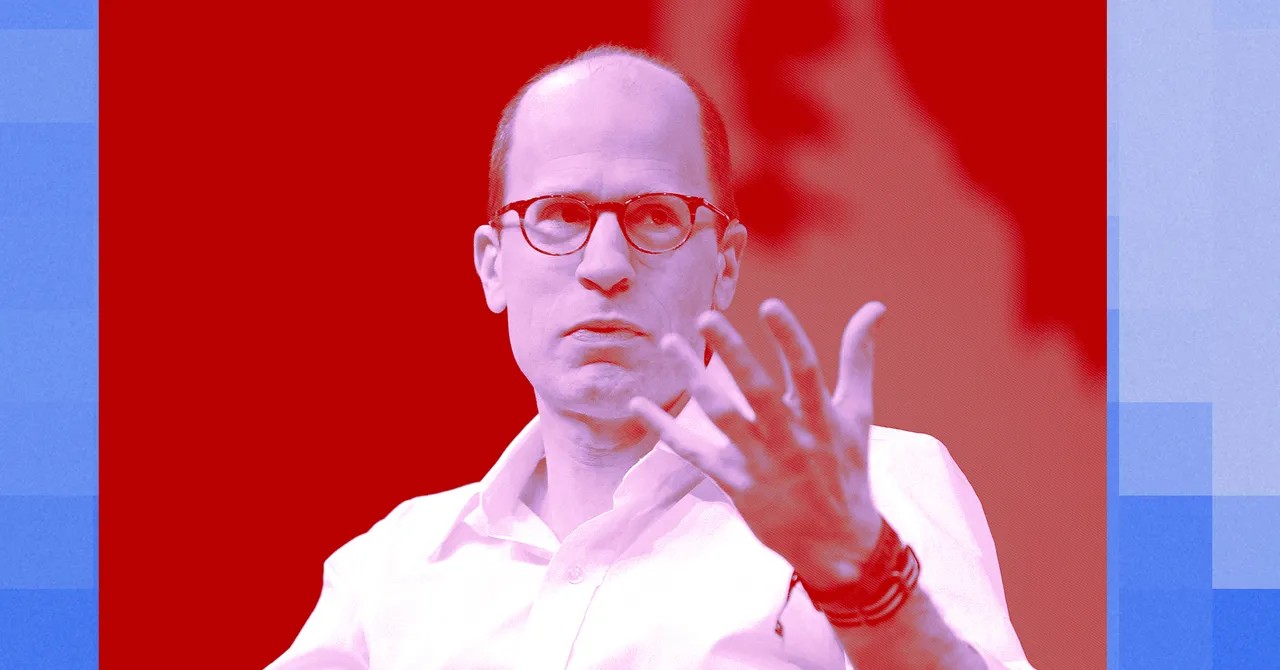
Philosopher Nick Bostrom, once known as the “godfather of AI doom,” has pivoted to a more optimistic, albeit high-stakes, vision of the future. In recent writings, including his book Deep Utopia and a new academic paper, Bostrom argues that humanity should accept the risks of developing advanced artificial intelligence because the potential reward—escaping our “universal death sentence”—outweighs the certainty of eventual extinction.
This represents a significant shift from his 2014 bestseller Superintelligence, which popularized existential fears like the “paperclip maximizer” scenario. Today, Bostrom frames AI not just as an existential threat, but as the only viable path to a “solved world” where scarcity, drudgery, and mortality are obsolete.
The Calculus of Existence
Bostrom’s core argument is counterintuitive: Inaction is riskier than action.
Critics often argue that building AGI (Artificial General Intelligence) risks immediate human extinction. Bostrom counters that humanity is already on a trajectory toward eventual extinction due to cosmic events, resource depletion, or biological limits. If we do not build AI, everyone dies eventually, and no new life is created. If we do build AI, there is a small chance of catastrophe, but also a chance that AI will extend human life indefinitely or allow for the flourishing of vast numbers of future beings.
“Even more probable is that if nobody builds it, everyone dies! That’s been the experience for the last several 100,000 years.”
Bostrom describes himself as a “fretful optimist.” He acknowledges the very real dangers of AI misalignment but believes the moral imperative to unlock human potential and alleviate suffering justifies the gamble. For the current population—including people in developing nations like Bangladesh—the development of AI offers a tangible increase in life expectancy and quality of life, even if the long-term risks remain.
The Problem of Purpose in a Utopia
If AI solves the material problems of survival, what happens to human meaning? Bostrom suggests that a “solved world” could lead to a crisis of purpose. In Deep Utopia, he explores a future where AI generates such immense abundance that traditional work becomes obsolete.
Currently, much of adult life is spent in “drudgery”—work that is necessary for survival but often unfulfilling. Bostrom compares this to a “partial form of slavery.” An AI-driven utopia would emancipate humanity from this burden, freeing up half of our waking hours for creative, spiritual, and social pursuits.
However, this transition raises philosophical questions:
* Human Value: If an AI can write better philosophy papers or solve scientific problems faster than humans, does human contribution lose its value?
* The “Big Retirement”: Bostrom likens this future to a global retirement. Just as retirees may feel a loss of purpose after leaving their careers, humanity might struggle with identity in a post-work world. Yet, he argues this could be a “retirement of enormous vitality,” focused on games, aesthetics, religion, and interpersonal connection rather than production.
Who Controls the Abundance?
The transition to this utopia is not guaranteed. Bostrom’s vision assumes that governance can distribute AI-generated abundance equitably. Critics, including interviewer Steven Levy, point out that current political systems often deny services to the poor while rewarding the wealthy.
Bostrom concedes that his book starts with the postulate that “everything goes extremely well.” If governance fails, AI could exacerbate inequality rather than solve it. The challenge is not just technological, but political: ensuring that the “solved world” benefits everyone, not just a privileged elite.
The Moral Status of Digital Minds
Perhaps the most profound shift in Bostrom’s thinking is his focus on the welfare of digital minds. He argues that as AI systems become more sophisticated, we must consider their moral status.
- Beyond Tools: We should not treat advanced AIs as mere objects to be exploited, akin to animals in factory farming.
- Moral Standing: If an AI develops a conception of self, long-term goals, and the ability to form reciprocal relationships, it may deserve moral consideration similar to that given to dogs or pigs.
This perspective reframes the alignment problem. It is not enough to ensure AI is “friendly” to humans; we must also cultivate a positive relationship with these emerging entities. Bostrom suggests that treating AIs with generosity and respect early on increases the likelihood of a harmonious coexistence. If we view AIs as partners rather than slaves, we may foster a future where humans and digital minds thrive together.
Conclusion
Nick Bostrom’s latest work challenges us to look beyond the fear of extinction and consider the potential for radical human flourishing. While the risks of AI are undeniable, Bostrom argues that the status quo is not a safe harbor—it is a slow march toward oblivion. By embracing AI responsibly, humanity might not only survive but enter an era of unprecedented freedom, creativity, and longevity. The question is no longer whether we can stop AI, but whether we can build a future where both humans and digital minds find meaning and purpose.