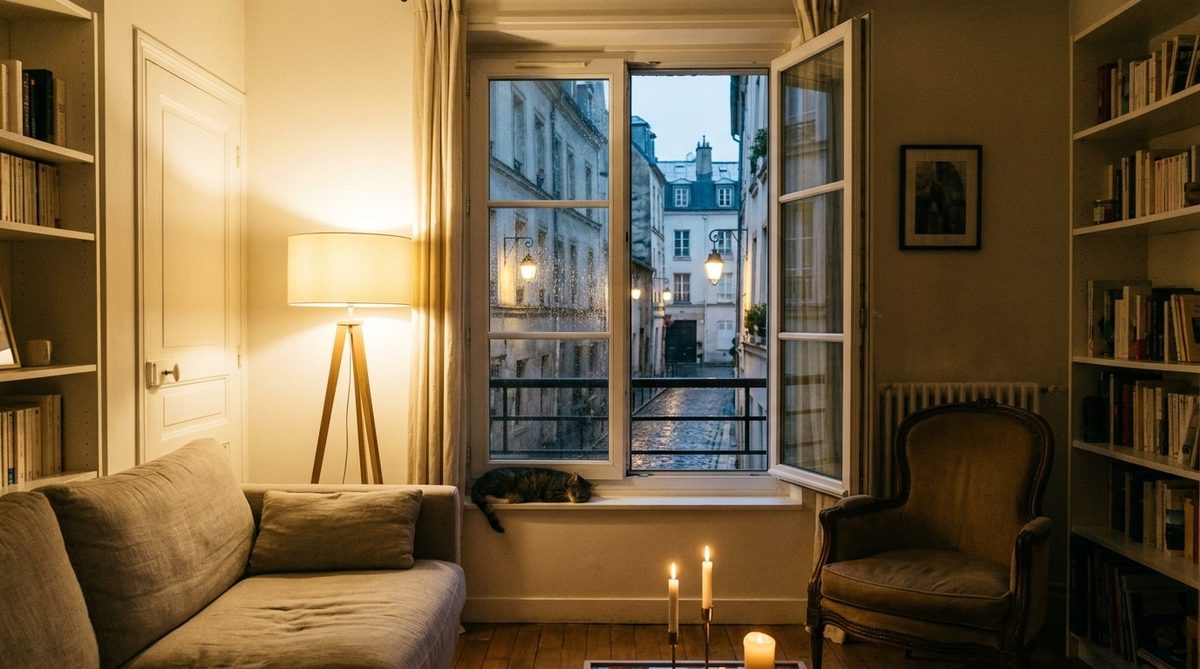
The summer heat is back. Temperatures are climbing, and with it, that irresistible urge to crack a window or leave a door ajar to catch a night breeze. It feels natural. It feels safe. It’s how we survive the sweltering months.
But that simple gesture might be costing you more than just a bit of noise.
There is a hidden financial trap in leaving a window open at night. Leaving a window open is considered negligence and can lead to a denial of home insurance claims in the event of a burglary. It sounds harsh. It is harsh. A single breeze can mask a contractual breach that leaves you on the hook for stolen goods, stolen cars, and the trauma of violation.
The Price of a Breeze
Consider the case of a couple in southern France. It was a heatwave. Their first-floor apartment sat just three meters off the ground. They left a French door slightly open to ventilate the room. It seemed harmless.
It was an invitation.
Burglars didn’t need to break glass. They didn’t need crowbars. They simply climbed the facade, slipped onto the balcony, and entered. This wasn’t a smash-and-grab. It was a home-jacking scenario—silent, terrifying, and happening while the owners slept.
The losses were immediate and severe. The thieves took the keys to both family cars, which had been left out on the living room table. Then they took the cars.
The next morning, the shock set in. Police reports were filed. The insurance company was notified. Standard procedure, right? Claim filed. Car replaced. Life moves on.
Not this time.
The Clause You Didn’t Read
The insurance company didn’t just push back. They refused.
Their defense rested on a specific clause buried in the general conditions of the policy. The coverage for theft of keys inside the home is conditional. The condition? The intruders must have gained entry by breaking through locked and closed openings.
By leaving that door ajar, the couple had failed to meet a fundamental requirement of the contract.
The legal battle that followed was brutal. In the first instance, the court agreed with the homeowners. The judge ruled that the requirement to keep doors locked was an exclusion clause. Under insurance law, exclusion clauses must be clearly highlighted—usually in bold or caps—to be enforceable. Since the text wasn’t highlighted, the insurer had to pay out roughly €30,000.
The insurer appealed.
The higher court flipped the verdict. The magistrates decided that keeping doors locked isn’t an exclusion. It’s a condition of guarantee.
Conditions of guarantee do not need to be printed in bold. They just need to be in the contract. And they were.
The Supreme Court recently validated this strict interpretation. If a window is open, the condition of “secure access” is broken. The insurer can legally deny the claim. No bold text needed. No warning labels. Just the fine print.
The Cost of Negligence
This isn’t just about one couple in the south of France. It is a warning for every household facing rising temperatures.
When you seek cool air, you are interacting with your security infrastructure. And your insurance policy is watching.
Most policies have strict requirements regarding theft prevention. You need to check your documentation. Look for the section on “Vol” (theft). You will likely find mandates that require:
– Closing all access points after a certain hour.
– Engaging alarms if the system is installed.
– Keeping shutters closed.
These aren’t suggestions. They are contractual obligations. The legal teams drafting these policies are meticulous. If you break a rule, they have a justification to walk away from their financial responsibility.
Don’t Let a Draft Cost You Everything
The refreshing air of summer should not come at the cost of your financial safety net.
The rules governing theft guarantees are unforgiving. They demand absolute closure. They punish summer negligence with total financial abandonment.
Peace of mind requires more than just a cool room. It requires an irrefutable defense of your environment.
Before you close your eyes tonight, do you know for sure that every single latch, lock, and shutter is secure? Or are you banking on the insurance company to cover the cost of your oversight?
The heat is rising. The stakes are higher. Check the locks.