Russia has taken its first concrete step toward establishing a sovereign satellite internet constellation, launching the initial batch of satellites for its Rassvet project. On March 23, Bureau 1440 deployed 16 broadband internet satellites into low Earth orbit from the military-controlled Plesetsk Cosmodrome.
While officially marketed as a commercial broadband service, the project’s structure, funding, and launch logistics reveal a dual-use infrastructure designed to serve both civilian needs and military objectives. Experts view Rassvet as Moscow’s direct response to SpaceX’s Starlink, aiming to secure independent communication channels in an era of heightened geopolitical tension and digital warfare.
From Experiment to Operational Service
The launch marks a significant transition for Bureau 1440, moving the project from experimental testing to the creation of a functional communication service. According to the company, this milestone was reached after 1,000 days of development following the launch of earlier experimental satellites.
The technical specifications of the Rassvet network are ambitious:
* Speed: Up to 1 gigabit per second per user terminal.
* Latency: Signal delay of up to 70 milliseconds.
* Scale: The constellation is planned to expand to at least 300 satellites by 2030.
Bureau 1440 announced via Telegram that the system is designed to provide reliable connectivity across vast and remote territories, a critical requirement for a country with Russia’s geographic span.
Military Implications and State Involvement
The strategic importance of Rassvet is underscored by its operational background. Unlike typical commercial satellite launches handled by the civilian space agency Roscosmos, this deployment was executed by the Russian Defense Ministry. This military involvement signals that the network is intended to be a resilient asset for state security and defense operations.
The impetus for such a project is clear: during the war in Ukraine, Starlink proved to be a decisive tool for Ukrainian forces, enabling rapid troop communication and coordination. While SpaceX has implemented restrictions on unauthorized terminals in certain combat zones, Moscow seeks an infrastructure that it can control entirely, without foreign interference or dependency.
Vitalij Egorov, a space expert and host of the channel The Open Universe of the Green Cat, notes that while Rassvet terminals are currently larger and heavier than Starlink’s dish, the project’s primary value lies in its sovereignty.
“Like all satellites intended for communications, they are also capable of military functions… Given the high effectiveness of Starlink’s use on the battlefield, Rassvet will also find use there,” Egorov states.
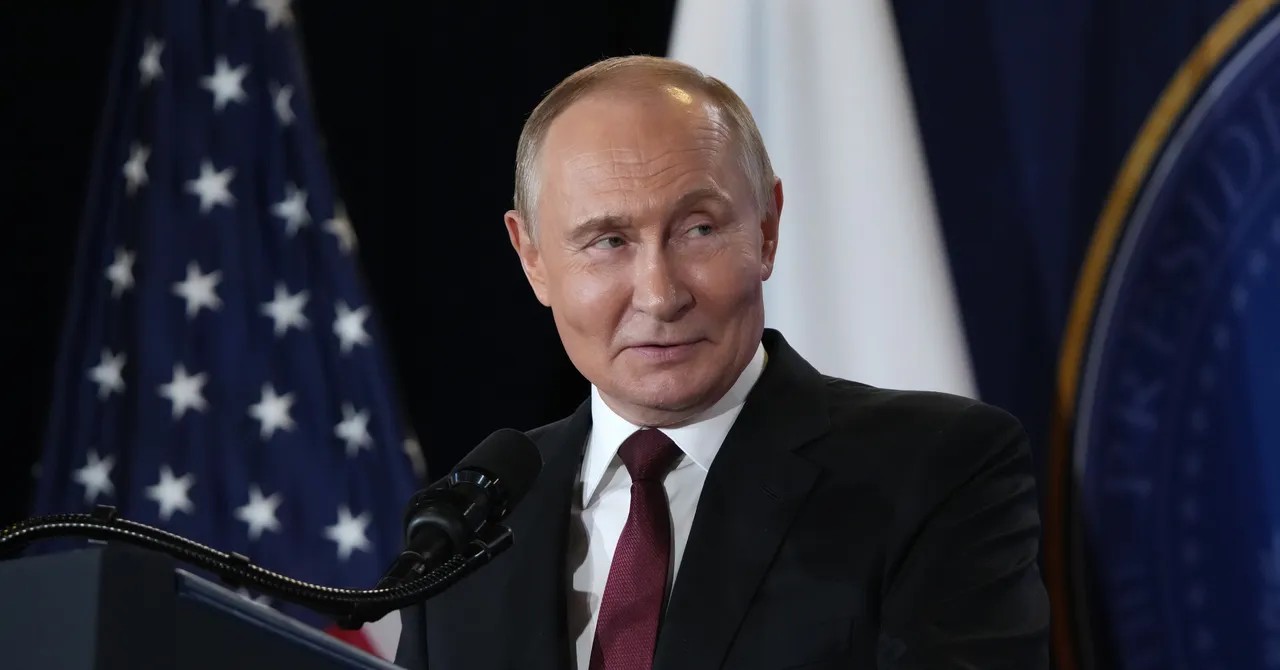
The Russian state is heavily invested in the project’s success. Independent reports indicate that the Ministry of Communications has allocated approximately 100 billion rubles ($1.34 billion) for the initiative, with Bureau 1440 prepared to contribute an additional 300 billion rubles. President Vladimir Putin hailed the launch as a “great event,” highlighting its national significance.
Technical Challenges and Orbital Strategy
Despite the political backing, Bureau 1440 faces significant industrial hurdles. To reach a constellation of 300–350 satellites by 2030, the company must achieve a production rate of one to two satellites per week. Currently, only SpaceX and OneWeb have demonstrated the industrial capacity to sustain such serial production in the Russian space sector.
Furthermore, the user experience may differ from Starlink. Starlink’s terminals are lightweight and easily deployable, whereas early Rassvet terminals are bulkier, which could limit immediate mobile or field applications.
However, Rassvet employs a distinct orbital strategy tailored to Russian geography:
* Orbit Type: Near-polar orbit with an inclination of 81.4 degrees.
* Altitude: Approximately 800 kilometers (500 miles), higher than Starlink’s typical 550 kilometers (341 miles).
This configuration ensures that satellites fly from south to north, providing consistent coverage across the entire width of Russia, from Crimea to the Chukotka Peninsula. This design prioritizes stability in remote, high-latitude regions over dense urban coverage, suggesting a primary focus on institutional, corporate, and military clients in hard-to-reach areas rather than mass consumer adoption.
The Architecture of Digital Control
The corporate structure behind Rassvet further illuminates its strategic role. Bureau 1440 was originally established in 2020 as a division of the telecom giant Megafon. In 2022, it was renamed and integrated into Iks Holding, a conglomerate also involved in developing internet surveillance and blocking systems.
This connection is significant. Moscow has increasingly utilized internet throttling and platform bans—targeting services like WhatsApp and Telegram—to control information flow and disrupt potential drone navigation systems during conflicts. By linking satellite infrastructure with domestic internet control mechanisms, the Russian state is building a closed-loop system for digital sovereignty.
Reports also highlight a direct link to high-level intelligence circles, with one of Iks Holding’s top managers being the son of Boris Korolev, Russia’s first deputy director of intelligence. This detail suggests that Rassvet is not merely a commercial venture but a component of a broader state strategy for information control and future warfare capabilities.
Conclusion
The launch of the Rassvet constellation represents more than a technological achievement; it is a strategic move to insulate Russia’s communications infrastructure from foreign influence. While it faces steep industrial challenges in scaling production and refining hardware, the project’s integration with military and security apparatuses underscores its role as a tool for both national connectivity and geopolitical leverage. As the network expands, it will likely shape the landscape of digital sovereignty and conflict in the coming decade.