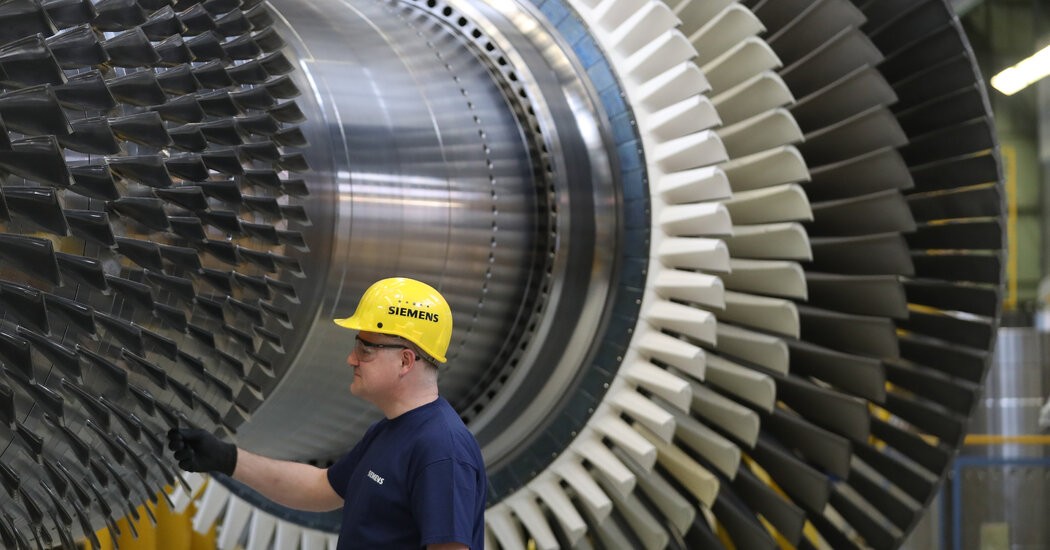
Siemens Energy is committing $1 billion to expand its manufacturing footprint in the United States, betting heavily on sustained growth in electricity demand driven by the artificial intelligence (AI) boom. The German industrial giant announced Tuesday that the investment will focus on increasing production of critical electrical equipment, including transformers, switchgear, and turbines.
The AI-Driven Power Surge
The move reflects a broader trend: the escalating energy needs of AI development. AI models require massive computational power, translating directly into significantly higher electricity consumption. Siemens Energy CEO Christian Bruch stated simply, “The electricity need is going to be there,” underscoring the company’s confidence in long-term demand. The expansion will support utilities and data center developers as they race to meet these growing requirements.
Expansion Details and Job Creation
The $1 billion investment will be distributed across multiple states, including Florida, North Carolina, and Mississippi. While some funding will modernize existing facilities, a new factory in Mississippi will be dedicated to manufacturing electrical switchgear, essential for managing power distribution. The expansion is projected to generate around 1,500 jobs in the U.S.
Supply Chain Pressures and Market Gains
The surge in AI-related infrastructure spending has already strained the electrical equipment supply chain, leading to price increases and extended lead times for key components. Siemens Energy has capitalized on this demand, with its stock rising over 160% in the past year – outperforming even some companies directly involved in the AI chip market, such as Nvidia.
Why This Matters
This investment highlights a critical but often overlooked aspect of the AI revolution: its insatiable appetite for energy. The expansion of power infrastructure is no longer just about meeting baseline demand; it’s about accommodating the exponential growth of AI-driven workloads. Without adequate investment in electricity production and distribution, the continued expansion of AI will be constrained.
The Siemens Energy move serves as a clear signal that the energy sector is positioning itself for a future where AI is not just a technological force, but a fundamental driver of electricity demand.