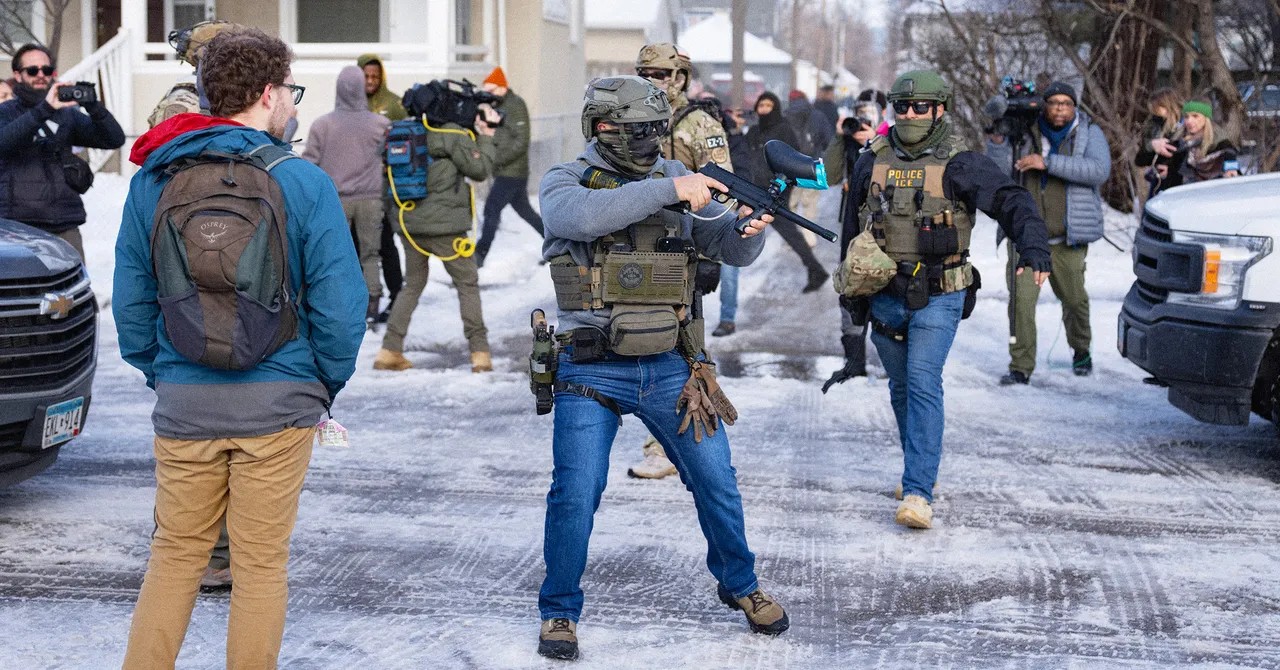
In the aftermath of a fatal shooting involving federal agents in Minneapolis, social media users are rapidly circulating AI-altered images falsely claiming to reveal the identity of the officer who fired the shot. The incident, which occurred Wednesday morning, involved masked Immigrations and Customs Enforcement (ICE) agents approaching a vehicle before one agent discharged a firearm, killing the driver, Renee Nicole Good.
Despite the lack of any unmasked footage from the scene, numerous manipulated images have surfaced on platforms like X, Facebook, and TikTok within hours. One prominent example includes a post by Claude Taylor, founder of anti-Trump PAC Mad Dog PAC, which has garnered over 1.2 million views, featuring a demonstrably fake unmasked agent. Other users have gone further, sharing unverified names and even linking to the social media profiles of innocent individuals.
The problem isn’t just misinformation; it’s the ease with which AI can create convincing fakes. According to UC-Berkeley professor Hany Farid, current AI tools cannot reliably reconstruct facial identities from obscured footage. “AI-powered enhancement has a tendency to hallucinate facial details,” Farid explains, meaning the generated faces are often entirely fabricated.
This incident follows a similar pattern seen in September, where AI-altered images of a suspect in another shooting were widely shared before the actual perpetrator was identified. The trend highlights a growing risk: the weaponization of AI to spread disinformation in high-stakes situations. This is compounded by platforms like X, where unverified users can easily disseminate false claims, and where the technology is now being monetized behind a paywall.
The proliferation of these fabricated images underscores the urgency of addressing AI-driven misinformation, especially in law enforcement contexts. The ease with which false identities can be created and shared poses a direct threat to both public trust and individual safety.
Ultimately, this situation demonstrates that while AI can enhance images, it cannot replace verified facts, and the speed at which misinformation spreads far outpaces the ability to correct it.