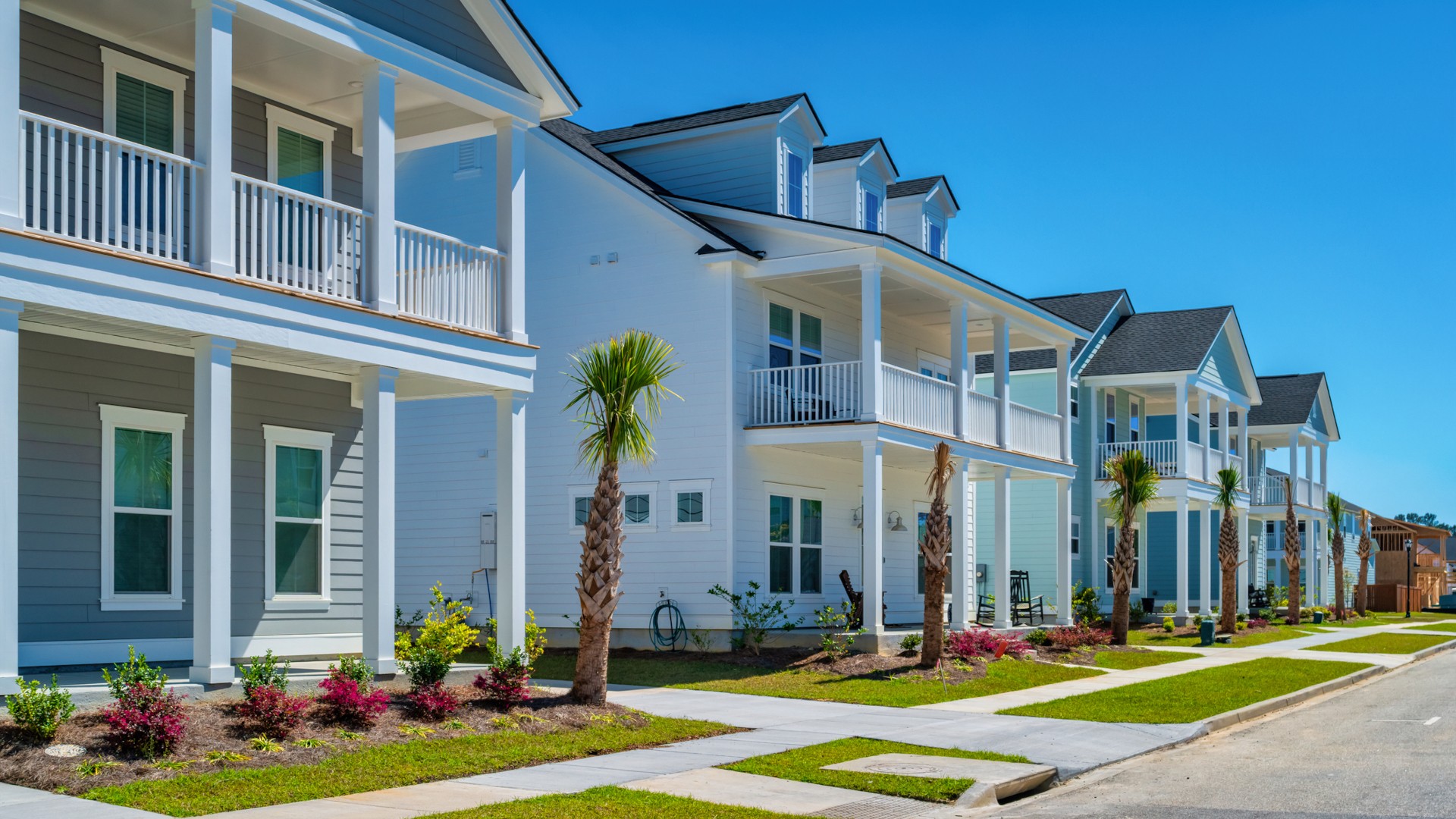
The U.S. housing market is undergoing a shift, with several East Coast cities poised for price corrections in the next 12 months. While national forecasts predict modest appreciation in 2026—around 2% according to Realtor.com—certain regions are experiencing increased inventory and weakening demand, signaling a potential pullback from recent gains. This isn’t a crash, but rather a rebalancing after the rapid growth seen during the pandemic.
Why East Coast Cities Are Vulnerable
The East Coast is particularly susceptible due to several converging factors. Rising inventory levels are a primary driver, with existing home listings projected to increase by roughly 9% in 2026. In some areas, the number of homes for sale already exceeds pre-pandemic levels. Additionally, a significant percentage of listings—around 20% according to Redfin—are seeing price reductions, indicating sellers are adjusting to slowing buyer activity.
The correction is happening because the rapid growth of the past few years was unsustainable. Many markets saw values skyrocket between 2020 and 2022, leaving them overvalued relative to local incomes and affordability. As demand cools, prices must adjust to meet realistic buyer expectations.
Five Cities Facing Potential Price Drops
-
Cape Coral-Fort Myers, Florida: This area is expected to experience the most substantial decline, with forecasts of a 10.2% drop according to Barron’s. The market boomed during the pandemic but now faces increasing supply and cooling demand. Zillow data already shows a 5.3% decrease in median values in Florida overall for 2025.
-
Sarasota, Florida: Sarasota is projected to see the largest national decline in 2026. Like Cape Coral, it benefited from pandemic-era migration but is now dealing with rising listings and slower sales. The market’s rapid expansion makes it particularly vulnerable to a correction.
-
Raleigh, North Carolina: Raleigh’s inventory is outpacing buyer demand, after seeing home values jump 40% between 2020 and 2022. While the decline won’t be as drastic as in Florida, year-over-year growth has slowed, and listings are increasing.
-
Daytona Beach, Florida: Affordability challenges and slowing demand are making Daytona Beach more susceptible to a price correction. Home values rose approximately 50% between 2020 and 2022, but active listings are rising, suggesting a potential hyper local price adjustment.
-
Charleston, South Carolina: Charleston’s home values increased by around 45% from 2020 to 2022, exceeding its historical growth rate. This rapid appreciation gives buyers more leverage as the market cools, potentially leading to lower prices.
The broader trend is clear: markets that experienced the most extreme growth during the pandemic are now facing the most significant risk of correction. This rebalancing is a natural part of the housing cycle, but potential buyers and sellers in these areas should be prepared for a shift in market dynamics.