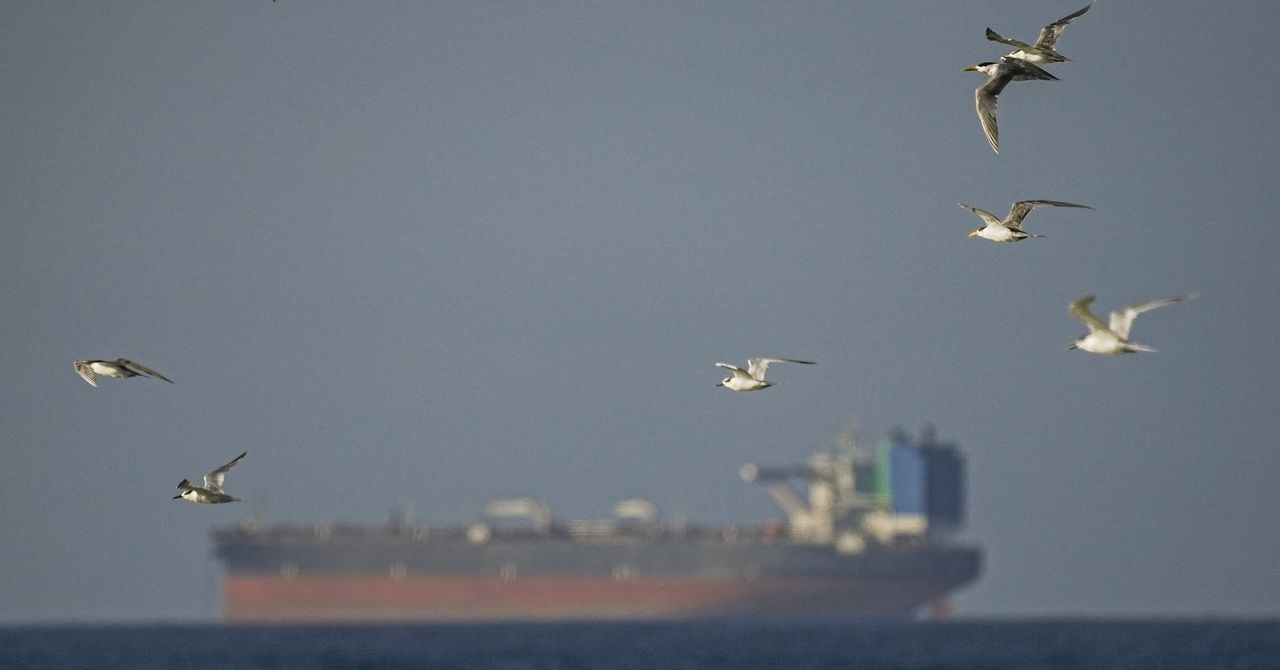
The Strait of Hormuz is one of the world’s most critical maritime chokepoints, facilitating approximately 20 percent of global petroleum consumption. However, a growing phenomenon of “ghost ships”—tankers that intentionally hide their identities and locations—is creating significant risks for global energy security and maritime safety.
The Rise of the “Shadow Fleet”
For years, a “shadow fleet” has operated in the shadows of international law. These vessels often engage in sanctions evasion, such as transporting Iranian crude oil in violation of international restrictions. To avoid detection, these ships employ two primary tactics:
- Jamming: Interfering with satellite signals to prevent transponders from broadcasting.
- Spoofing: Creating false signals to make a vessel appear to be somewhere it is not, or to disguise its true identity.
While these tactics are not new, their scale has reached unprecedented levels. Recent data from maritime intelligence firm Windward AI indicates that at certain points, over half of the vessels in the Strait had their signals jammed. With more than 800 vessels currently navigating the Persian Gulf, the sheer volume of obscured data presents a massive challenge for maritime authorities.
Why This Matters: Beyond Economic Volatility
The implications of these “disappearing ships” extend far beyond the threat of global economic disruption or recession. The risks are immediate and physical:
- Navigational Hazards: When tankers do not accurately broadcast their positions, the risk of collisions or groundings increases exponentially.
- Environmental Catastrophe: A collision involving a massive oil tanker could result in catastrophic oil spills, devastating marine ecosystems in the region.
- Geopolitical Instability: In a region marked by high tension between Iran, Israel, and the US, the presence of unidentified, unmonitored vessels adds a layer of unpredictability that can escalate local conflicts.
The Technological Arms Race
As bad actors become more sophisticated at hiding, maritime analysts are turning to a complex array of technologies to unmask them. Because the standard Automatic Identification System (AIS)—which broadcasts a ship’s name and IMO number—is easily manipulated, analysts must “triangulate” the truth using multiple data streams.
Advanced Detection Methods
To maintain visibility, intelligence firms are stitching together various high-tech sources:
- Synthetic-Aperture Radar (SAR): Uses microwaves to “see” through clouds, rain, and total darkness, making it impossible for ships to hide simply by waiting for nightfall or bad weather.
- Electro-optical Imagery: Uses electronic sensors to detect visible and near-infrared light.
- Radio-Frequency (RF) Signals: Monitoring wireless data transmissions to track movement.
- Human Presence Signals: Utilizing mobile device data from onboard crews to confirm a vessel’s location.
Data Challenges and Solutions
The task is becoming more difficult due to shifting geopolitical landscapes. For instance, some US satellite firms have recently limited high-resolution imagery of the region, forcing analysts to “dust off” older sources and seek out alternative Western data providers.
Despite these hurdles, the demand for this intelligence is surging. Since roughly two-thirds of the tanker traffic moving through the Strait involves vessels with histories of sanctions violations, the data provided by these analysts is essential for marine insurers, oil traders, and global financial institutions.
“I think of them like recalcitrant children,” says Michelle Wiese Bockmann, senior maritime intelligence analyst at Windward AI. “When you find a ship and you uncover which one it is, it’s like, ‘Ah, I see you.’”
Conclusion
The surge in signal jamming and spoofing in the Strait of Hormuz has transformed maritime monitoring into a high-tech game of cat-and-mouse. As shadow fleets grow more elusive, the ability to accurately track these vessels remains vital to preventing environmental disasters and maintaining global energy stability.