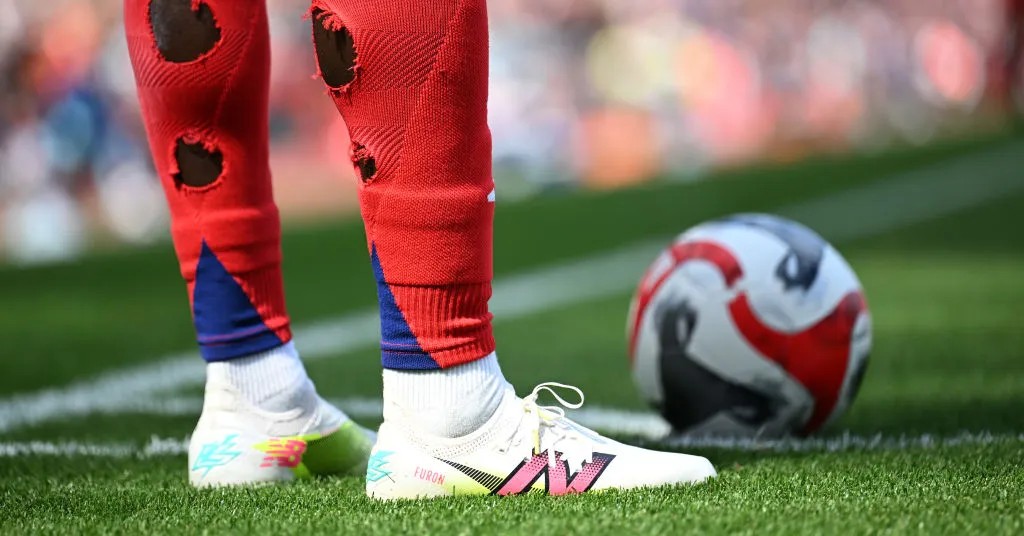
Look at their legs. Half the roster has Swiss cheese calves.
It’s becoming the new normal at the 2024 World Cup cycle and heading into 2026. Players step onto the pitch with massive gashes in the back of their socks. Social media blows it up, claiming it’s a secret tactical advantage. It isn’t. People have done this for years, at the Euros, at the Olympics, in various international tournaments. Science still doesn’t care about it. Or rather, science doesn’t support it.
Here is how it works. Professional soccer socks are built tight. They are supposed to be tight.
They hold your shin guard in place. They support your ankle and the arch. They lock down the calf so your foot doesn’t slide around in your cleats. Materials like polyester and spandex have gotten lighter, sure, but the philosophy hasn’t changed since the eighties. It is all about compression.
Some players hate it.
They say it pins. The sensation of numbness or tingling in the calf becomes unbearable halfway through a ninety-minute sprint. So they pull out scissors. They cut holes. They want to “release tension.”
There is a mechanical reason this happens.
When you sprint or pivot, that giant muscle on your back leg bulges. It gets thick to push you forward. Thousands of times a game. If a sock is too tight, it fights that expansion. You feel pressure. Constant, annoying pressure.
The players think the cut lets the muscle breathe. It makes sense to them. Less tight fabric means less cramp, less pain, more freedom.
Wrong.
Sports doctors and recovery specialists point to zero evidence for this. None. Actually, most studies on compression gear say the opposite. If fitted correctly, the tightness helps reduce inflammation after you go hard. Cutting the sleeve off removes the support without fixing the underlying issue.
But the trend keeps growing. Why?
Perception is reality in high-stakes sport.
Maybe the player feels trapped. If they cut the hole, they feel freer. Even if their biomechanics haven’t improved, their brain tells them they are faster. Confidence matters. If you feel restricted, you hesitate. If you remove the restriction—even if it’s only in your mind—you move.
Two guys can wear the same socks. One hates them. One ignores them. It’s personal. It’s anatomy. It’s psychology.
The rules allow it, as long as you are covered. You still have to hide the shin guard. You can’t rip your shirt off, but you can slash your socks. It is a loophole players exploit.
We aren’t wrapping this up neatly because the trend won’t end soon.
It is a ritual now. Like chewing the mouthguard. Like crossing your fingers before a kick. The benefit isn’t physiological. It is entirely mental.
More Heat. More Tech. More Chaos
While the sock drama unfolds, other stories dominate the cycle.
- The Heat is On : Miami, Houston, Dallas, Kansas City. A new report warns these cities will be dangerously hot in 2026. July in the sun is brutal. Heat domes make things worse. Day drinking doesn’t help.
- Seismic Fans : Remember Mexico’s win over Ecuador? The ground actually shook. Seismographs caught the vibration from the crowd’s eruption. Norway’s fans in Bergen did it too. Goals cause tremors.
- Digital Twins : Referees aren’t just looking at offside cameras anymore. They use 3D body scans of players to see every angle. Digital twins are eliminating bad calls.
- Shark Surprise : Video confirmed. A Great White Shark was seen in the Mediterranean. It helps conservation efforts.
Other notes:
* Smart chess boards are finally good enough for masters and beginners alike.
* Škoda’s new EV, the Peaq, seats seven people. It will be expensive. Very expensive.
* A startup is using special polymers to help nerves heal after surgery or… avocado accidents. Yes. Really.