For many aspiring DIYers, the barrier to entry isn’t a lack of desire, but a lack of equipment. There is a common trap in the hobby: buying an entire warehouse of specialized tools only to realize most of them sit idle. However, true skill development requires a foundation of reliable, versatile equipment.
You don’t need a workshop full of heavy machinery to tackle most home repairs. By focusing on a few high-utility power tools, you can perform much of the work typically reserved for professionals—including tasks that usually require much larger, more expensive saws.
1. The Versatile Drill
The drill is the undisputed workhorse of any toolkit. It is often the most frequently used tool because its applications extend far beyond simply making holes.
- Multi-purpose utility: A drill can be used to mix paint, sand rust from metal, or even polish a vehicle.
- Power considerations: For light household tasks, a 12-volt, 8-amp model is usually sufficient. For heavier duty work—such as drilling into thick metal or masonry—look for an 18-volt, 10-amp model or higher.
2. The Impact Driver: The Pro’s Secret Weapon
If there is one tool that fundamentally changes the DIY experience, it is the impact driver. While you can drive screws with a standard drill, doing so often leads to stripped screw heads and puts unnecessary strain on the tool’s motor.
The impact driver uses a “hammer and anvil” mechanism to deliver rotational force in short, high-torque bursts. This makes it ideal for modern star-shaped (Torx) fasteners, which are notoriously difficult to drive into hard wood without stripping.
What to look for when buying:
– Torque Rating: Measured in inch-pounds. A standard pro-level tool typically ranges between 1,500 and 2,500 inch-pounds.
– Efficiency: Look for higher “impacts per minute” and “rotations per minute” (RPM) to ensure the tool can handle various fastener sizes efficiently.
3. The Cutting Choice: Circular Saw vs. Jigsaw
When it comes to woodcutting, your choice depends on your comfort level and the scale of your project.
The Circular Saw (For Precision and Speed)
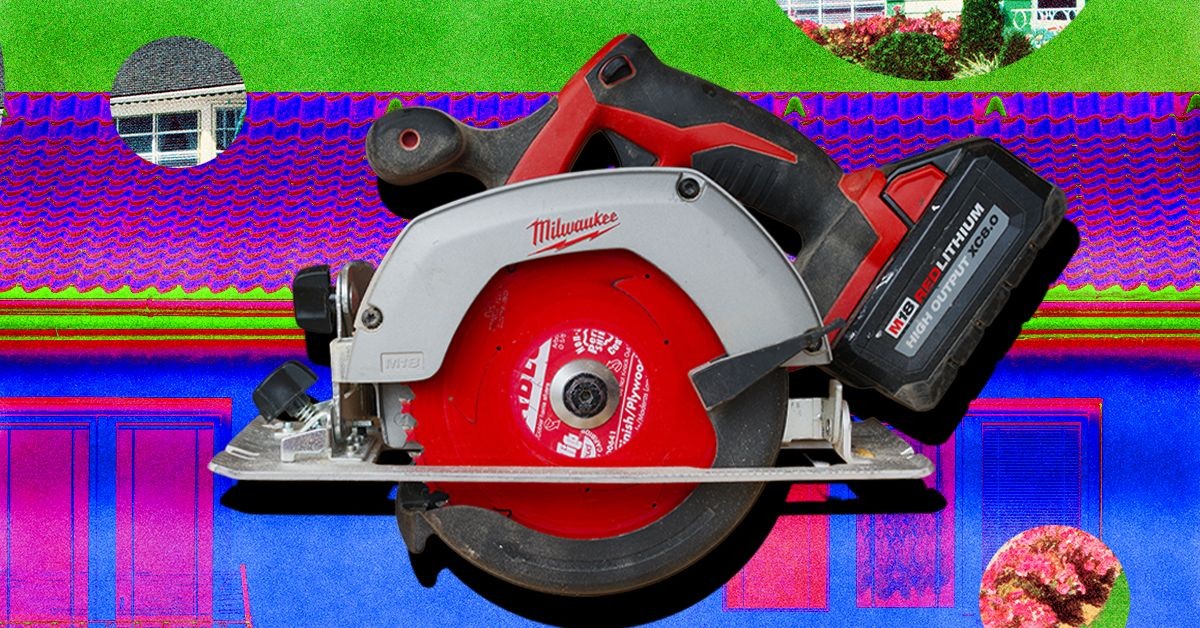
The circular saw is the most versatile cutting tool. While more intimidating for beginners, it is much faster than a jigsaw.
– Corded vs. Cordless: Corded saws offer consistent, high power, while cordless models provide unmatched mobility.
– Motor Types: If going cordless, prioritize brushless motors. They use magnetic fields rather than physical brushes to generate torque, resulting in less heat, better battery life, and greater durability.
– Pro Tip: Always invest in a high-quality blade. A sharp blade makes cutting easier and preserves your battery life.
The Jigsaw (For Beginners and Detail Work)
If a circular saw feels overwhelming, a jigsaw is a safer, more approachable alternative. It can cut through standard lumber like a 2×4, though it requires more patience and time.
💡 Essential Advice for the New DIYer
The Battery Ecosystem Trap
One of the most important decisions you will make is choosing a brand ecosystem. Because battery platforms are not interchangeable between brands (e.g., a DeWalt battery will not fit a Milwaukee tool), you should commit to one major manufacturer—such as Milwaukee, DeWalt, Makita, or Ryobi —to ensure all your future tools share the same power source.
The “Bonus” Essential: The Shop Vac
A project is only as successful as the cleanup. A dedicated wet/dry shop vacuum is essential for maintaining a safe and functional workspace, especially when dealing with sawdust or liquid spills.
Summary: To build a functional home repair kit without breaking the bank, prioritize a high-quality drill, an impact driver for fasteners, and a versatile saw. Choose a single battery brand to ensure long-term compatibility and efficiency.