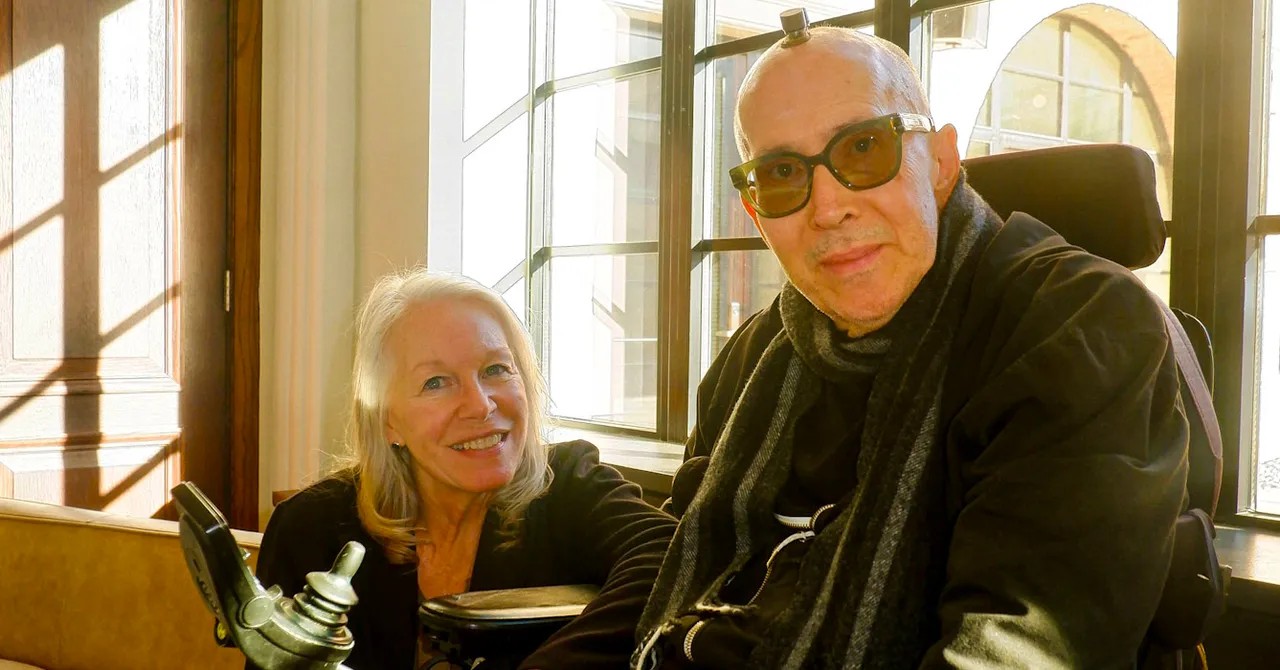
A 69-year-old research psychologist, Galen Buckwalter, is pioneering a new form of creative expression by making music directly with a brain implant. Paralyzed from the chest down since age 16, Buckwalter volunteered for a Caltech study in 2024 involving a six-chip neural interface from Blackrock Neurotech. The goal was to contribute to advancements that could help others with severe disabilities. Instead, he’s found an outlet for artistic creation.
The technology, known as a brain-computer interface (BCI), is rapidly evolving. Companies like Paradromics, Synchron, and Neuralink are developing these systems to restore movement and communication to people with paralysis. But Buckwalter demonstrates that BCIs can move beyond purely restorative applications into entirely new realms of expression. Other recipients of brain implants have already used the technology to produce digital art.
From Thought to Tone
Working with Caltech graduate student Sean Darcy, Buckwalter has developed an algorithm that translates his neural activity into musical tones. As the frontman of the Los Angeles punk band Siggy for 29 years, Buckwalter has integrated these mind-generated sounds into their latest album, Wirehead, released on March 15.
Buckwalter explains the process as a form of controlled neuron activation. The implants contain 384 independent channels that monitor his brain activity. By focusing on specific movements—such as flexing or extending a toe—he can trigger corresponding tones. “If I think about moving my index finger, and then think about moving my pinky, I can do that for as many channels as I have volitional control over,” he says.
The system allows him to manipulate pitch by consciously activating or suppressing neurons. Darcy’s software includes a virtual keyboard that requires a sustained level of neural output to trigger the tones, making it feel like playing an instrument. Currently, he can produce two tones simultaneously, though he believes expanding this capacity is achievable.
Beyond Restoration: The Power of Creative Exploration
Buckwalter emphasizes the importance of incorporating user preferences into BCI research. “The researchers have their experiments and aren’t always considering how to make the experience more interesting for the people using it,” he notes. He argues that exploring creativity is essential to the long-term success of the technology.
“I’m a quadriplegic for the rest of my days,” Buckwalter says. “But to have this enhance my creative activities… it’s awesome. It is so empowering to be able to do entirely unique things.” His bandmates fully support his work, and the experience of hearing the tones for the first time was “mind-blowing.”
The project is already expanding toward a full-song composition generated entirely from his neural activity, with Darcy acting as a “knob turner” to modulate the tones. Buckwalter’s ultimate goal is to create a complete DJ setup controlled solely by his thoughts.
“This is brave new territory,” Buckwalter explains. “The fact that I’m controlling it is much more evident with the sounds. When I’m thinking about moving my toe and all of a sudden there’s this pitch, it’s like, whoa.”
Buckwalter’s work highlights the immense potential of BCIs to not only restore function but also unlock entirely new forms of human expression. The technology is moving beyond simply helping people do things, and toward enabling them to create in ways previously unimaginable.