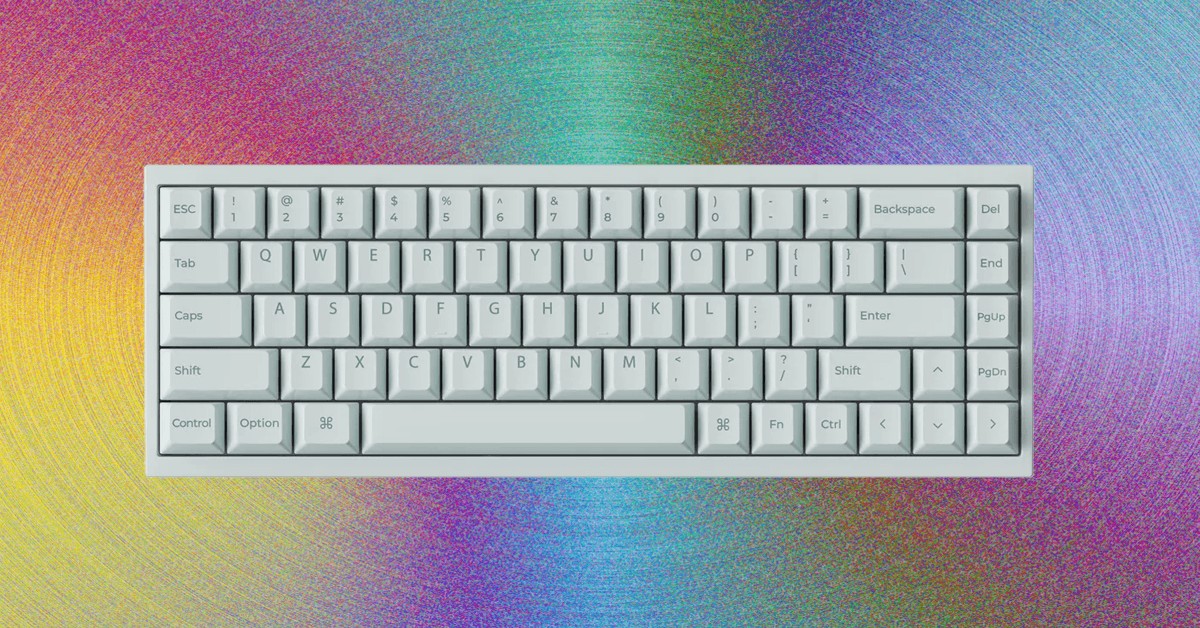
Keychron’s Q16 HE 8K keyboard attempts to push the boundaries of keyboard aesthetics with an all-ceramic design, but ultimately falls short of delivering a premium experience. While the company has a history of innovative products, this latest offering prioritizes novelty over functionality, sacrificing key elements in pursuit of a unique look. The Q16 is also among Keychron’s first devices to feature tunneling magnetoresistance (TMR) switches – a technology that promises performance gains but feels misplaced in a fundamentally flawed product.
The Ceramic Gamble
The keyboard’s ceramic keycaps and case offer a peculiar texture, blending ceramic and plastic in a way that feels less refined than premium ceramic materials. The glaze appears plasticky rather than smooth, and the keycaps lack the density of true ceramic. Typing on the Q16 produces a hollow, resonant sound with a dull, undefined tone – a far cry from the crisp “marbly” resonance expected from ceramic keycaps.
The spacebar is particularly problematic, exhibiting a warbly resonance that vibrates through the desk with each press. This vibration, felt even through a deskmat, creates an unpleasant “pop” noise and disrupts typing flow. The keycaps also suffer from inconsistent thickness, allowing LED lighting to bleed through in darker environments. Some keys are visibly misaligned, further detracting from the keyboard’s supposed premium quality. The glossy finish attracts fingerprints, making the keyboard appear smudged even after minimal use.
TMR Switches: A Glimmer of Innovation
Despite the shortcomings of its exterior, the Q16 features impressive internals. Keychron’s implementation of TMR switches – a newer alternative to Hall effect sensors – offers improved accuracy and reduced power draw. These switches deliver fast, responsive performance, with adjustable actuation distance and customizable RGB lighting. The Rapid Triggers setting allows for instantaneous key presses, while SOCD settings prevent conflicting inputs during rapid movements.
TMR sensors operate on the principles of quantum tunneling, where subatomic particles pass through barriers they shouldn’t be able to cross. This phenomenon, though complex, results in precise and efficient input detection. While the technology may sound esoteric, the Q16’s TMR switches function reliably without posing any real-world risks.
A Trend-Driven Product
The Q16 HE 8K feels less like a thoughtfully designed keyboard and more like an attempt to capitalize on the ceramic keycap trend. Unlike the K2 HE Special Edition, which seamlessly integrated modern styling with functionality, the Q16’s ceramic elements don’t elevate the experience. The case doesn’t sound better than metal or plastic, and the keycaps don’t provide a unique typing feel. The keyboard’s strengths – its smooth switches and customizable settings – are overshadowed by its flawed exterior.
The Q16’s build quality is solid, with brass mounting posts and silicone dampeners, but these improvements are lost amidst the ceramic’s shortcomings. The keyboard disassembles easily, and the daughterboard design protects the USB-C port from vibrations. However, these details don’t compensate for the underlying conceptual flaws.
Ultimately, the Keychron Q16 HE 8K is an overpriced experiment that prioritizes aesthetics over functionality. While the TMR switches offer genuine innovation, they are overshadowed by the keyboard’s underdeveloped ceramic design.