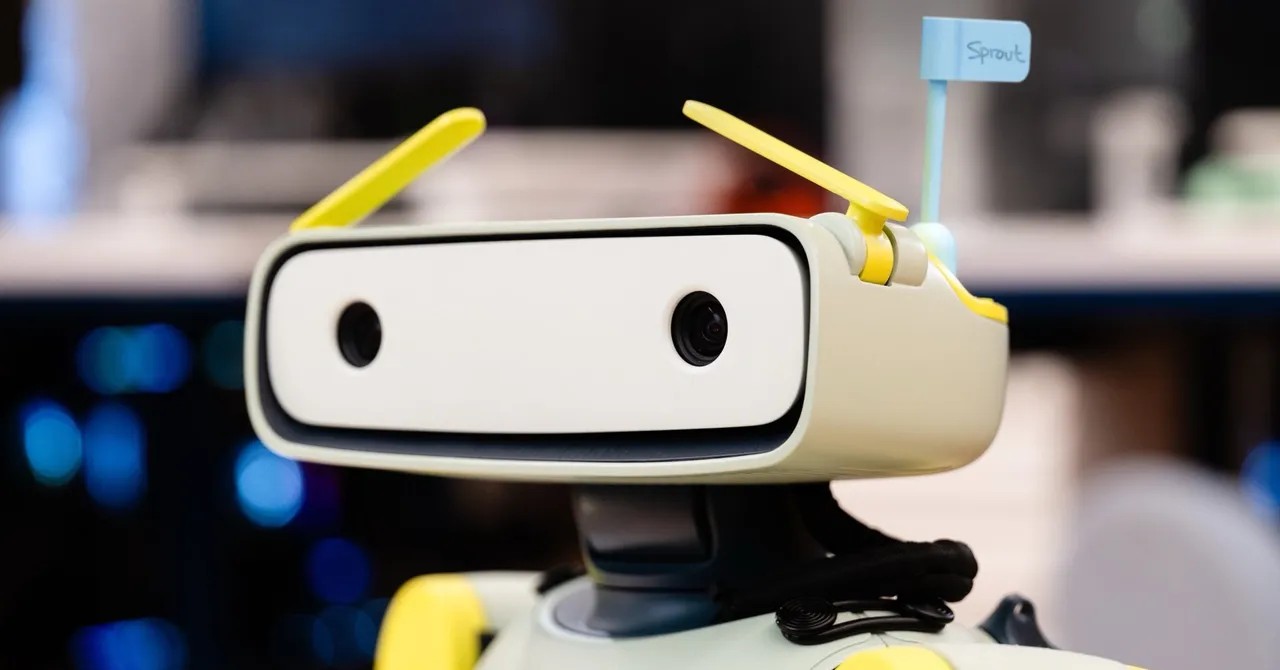
A new humanoid robot, Sprout, is entering the market with a surprising pitch: it’s not meant for factories, but for customer service. Developed by startup Fauna, this roughly child-sized robot is now available for $50,000, and the company is already in talks with hotels to deploy it as a personal assistant.
The Rise of Humanoids
The launch of Sprout highlights a booming trend in the United States. Over a dozen companies, including giants like Boston Dynamics, Tesla, and emerging players like Agility Robotics, are investing in humanoid robot development. Even Chinese manufacturers such as Unitree are offering models for as little as $20,000. Despite lingering questions about practicality, the industry is growing rapidly.
Sprout’s Unique Approach
Unlike most humanoid projects focused on industrial labor, Fauna believes the first real market for robots will be in entertainment and service roles. Sprout is designed to be easily programmable, making it useful for research while also being intuitive for real-world deployment. The robot comes equipped with software libraries for autonomous navigation, environmental scanning, and language model access.
Fauna’s early customers include Disney and Boston Dynamics. Sprout also boasts a balance-recovery system and even mechanical eyebrows to simulate human-like expression.
AI Integration
The key to Sprout’s potential lies in the integration of AI systems. The robot can interpret commands using Large Language Models (LLMs) – as demonstrated when it autonomously located and reported the contents of a refrigerator after being asked. The company emphasizes that advances in object recognition AI, currently being developed for smart glasses, will further enhance robot interaction with human environments.
The Future of Human-Robot Interaction
Fauna’s CEO, Robert Cochran, suggests that Sprout represents a “Hello World” moment for consumer humanoid robots. The ability to map and navigate autonomously, combined with natural language processing, could open up a wide range of applications.
“You can kind of get a ‘Hello World’ example of a robot where you can talk to and autonomously map and navigate its environment effectively,” Cochran said. “And from there, the world’s your oyster.”
The service industry may be the first to fully integrate these technologies, but the broader implications for automation, labor, and human interaction are significant.