


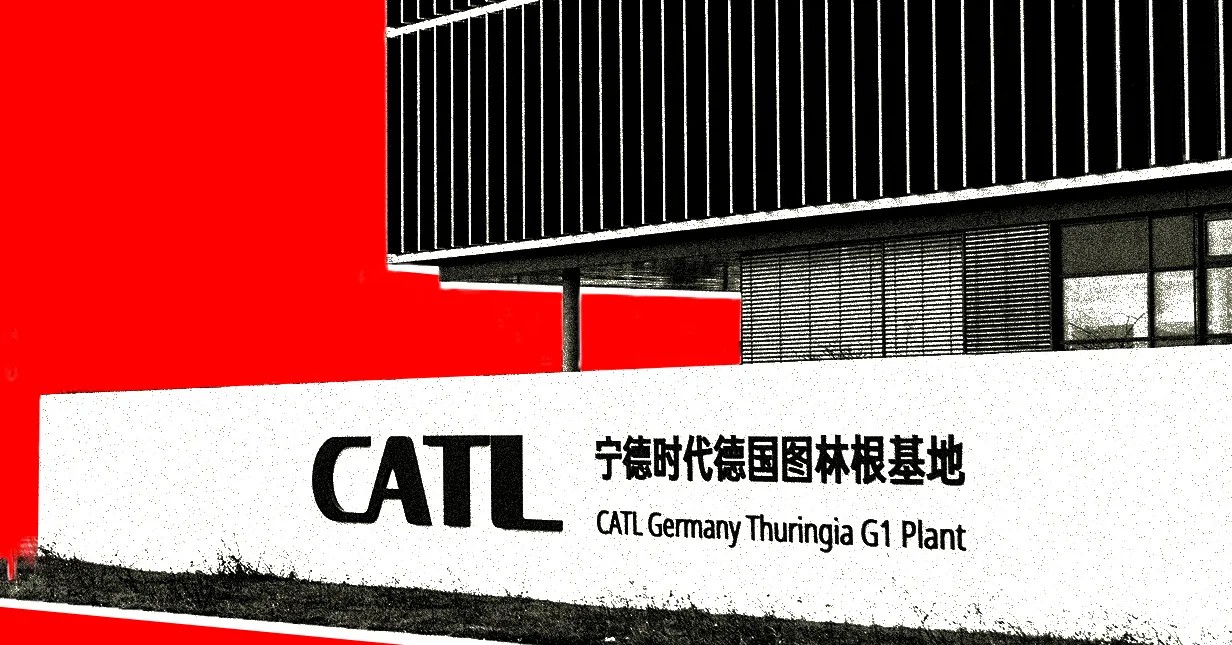
Chinese battery manufacturers are reshaping the global energy landscape by aggressively expanding production overseas. Companies like CATL, BYD, and Gotion are no longer simply “Made in China” brands; they’re building factories on every continent, challenging traditional narratives of low-cost labor and heavy pollution. A recent investigation identified 68 facilities built or planned over the last decade, signaling a new phase in Chinese manufacturing where efficiency and technological advancement outweigh geographic limitations.
The Changing Face of Global Production
This expansion isn’t just about cheaper production costs. Chinese firms have become so competitive that they can establish factories anywhere and still outperform local players. The shift is already transforming the energy transition, influencing labor markets, and reshaping technology transfer dynamics. For example, Hungary has emerged as a key hub, hosting at least four Chinese-owned battery plants, including a massive $8.5 billion project. This makes Hungary a testing ground for how communities will react to this influx of foreign investment.
However, the transition isn’t seamless. Local skepticism exists regarding hiring practices, with concerns that Chinese companies will prioritize cheaper migrant labor over local workers. CATL, the world’s largest lithium battery maker, faced backlash after layoffs at its Hungarian factory, prompting a municipal investigation into hiring promises. Environmental concerns also loom large. Protests over water usage and pollution mirror issues seen with earlier Japanese and Korean battery factories, highlighting the inherent environmental challenges of battery production. A Hungarian court even suspended Samsung battery production over pollution concerns, setting a precedent for stricter oversight.
The Reality on the Ground
The expansion is not without its challenges. Several factory investments have been paused or canceled, partly due to slower-than-expected electric vehicle (EV) adoption in some markets. Chinese firms made aggressive plans when government subsidies were abundant, but policy shifts, like the cancellation of EV incentives under President Trump, force recalibration. Even Europe, once committed to phasing out gas cars by 2035, is reconsidering its timeline.
Despite these hurdles, Chinese battery makers are diversifying. As EV demand fluctuates, they’re pivoting towards energy storage solutions, recognizing that demand for grid-level and residential batteries is less politically contested. Companies like Ford and Envision AESC are shifting production to meet this growing need, ensuring investments don’t go to waste.
The Transfer of Technological Advantage
The underlying dynamic is a reversal of past technology transfers. For decades, Western automakers exchanged know-how for access to the Chinese market. Now, the tables have turned. Ford CEO Jim Farley openly stated the goal is to “get access to their IP,” just as Chinese firms once sought Western expertise. French President Emmanuel Macron echoes this sentiment, emphasizing that Chinese investment is welcome only if it contributes to European growth and facilitates technology transfer.
This approach acknowledges that the long-term vision lies in battery technology, not just petroleum. As one industry expert put it, “the only long game we keep betting on is petroleum which, frankly, shows zero vision.” The global shift towards batteries is inevitable, and countries are racing to secure their place in the new supply chain.
In conclusion, the expansion of Chinese battery factories isn’t just an economic trend; it’s a geopolitical shift with far-reaching implications for labor, environment, and technological dominance. The world is now grappling with the consequences of this transition, as Chinese innovation and investment reshape the future of energy.


