The US government is increasingly blurring the lines between foreign policy and domestic law enforcement, with aggressive tactics now deployed both abroad and within American communities. This shift is marked by unchecked power, questionable intelligence, and a growing reliance on unregulated technology. The consequences range from destabilizing foreign governments to escalating conflict at home.
Venezuela: A Failed Intervention and a Dangerous Precedent
The Trump administration’s attempt to force regime change in Venezuela has yielded little success but established a precedent for direct US intervention in Latin American affairs. Despite claims of an impending “invasion” from criminal gangs like Tren de Aragua, intelligence records reveal the threat was exaggerated, likely to justify further escalation.
This strategy echoes historical interventions but is uniquely defined by Trump’s willingness to disregard diplomatic norms. The situation is not simply about Venezuela; it sets a dangerous standard for future engagements in the region.
Domestic Crackdowns: ICE and the Erosion of Due Process
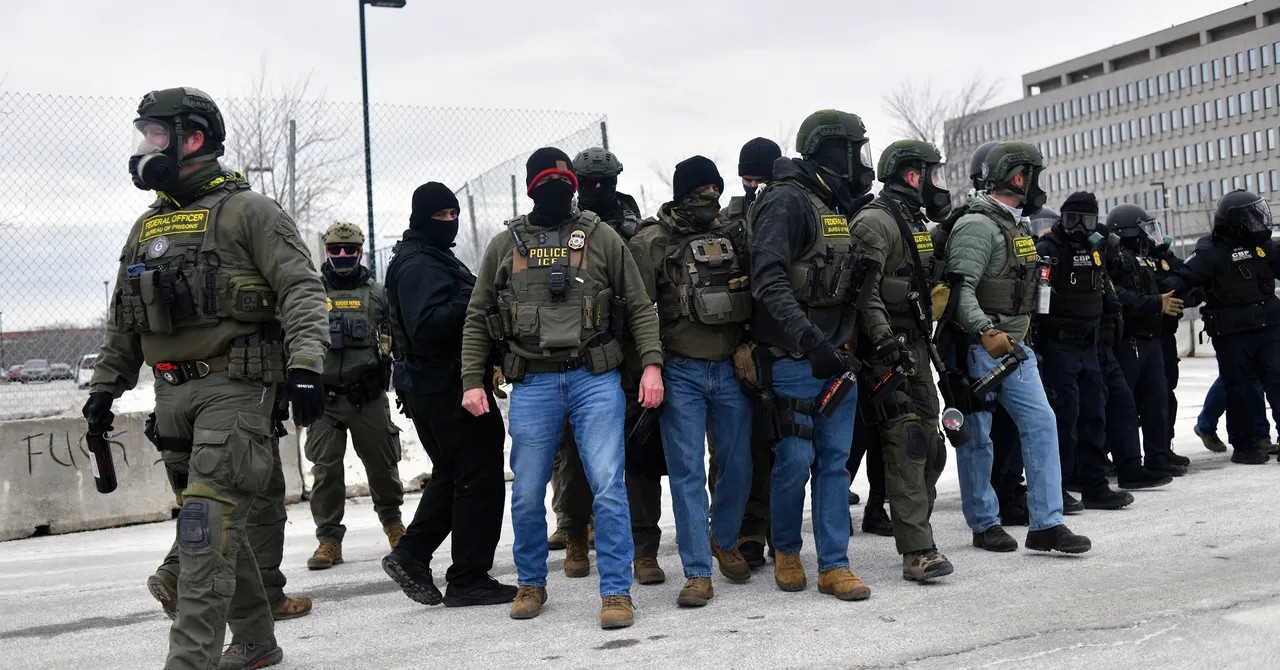
Meanwhile, Immigration and Customs Enforcement (ICE) has adopted increasingly militarized tactics within the US. Agents are operating with impunity, having shot and killed over two dozen people in the past decade without facing criminal charges.
The agency’s methods extend beyond brute force:
- Data Harvesting: ICE is actively seeking commercial “ad tech” and “big data” tools to enhance surveillance capabilities.
- AI-Driven Operations: Reports suggest that AI-driven systems are being deployed without adequate training, potentially leading to misidentifications and wrongful enforcement actions.
- Aggressive Enforcement: States like Minnesota are suing the federal government to halt ICE operations, which they characterize as an “invasion.”
The Rise of Paramilitary Tactics and Political Marketing
The lines between law enforcement and paramilitary activity are also blurring. Protest policing is increasingly designed to provoke antagonism for political marketing purposes rather than maintaining order. This trend, coupled with the decline in the need for extremist groups like the Proud Boys, suggests that the government is now capable of self-radicalization through direct action.
AI, Misinformation, and the Future of Control
The situation is further complicated by the spread of AI-generated content. While some videos depict cathartic confrontations between civilians and ICE agents, they also contribute to a growing landscape of misinformation. This makes it harder to distinguish between real threats and manufactured narratives.
The convergence of unchecked enforcement power, unregulated technology, and weaponized intelligence is creating a volatile environment. The US is not just exporting its interventionist policies; it is importing the same tactics back home.
The escalation of US intervention abroad and at home represents a clear pattern: power without accountability. The long-term consequences include the erosion of civil liberties, the destabilization of foreign governments, and a growing risk of domestic conflict.