I don’t have a TV. We never got one. No theater room in the apartment. Too much hassle for what it was. My wife and I just hunch over laptops on the couch like two broke students sharing a single pair of headphones. It sucks. Really.
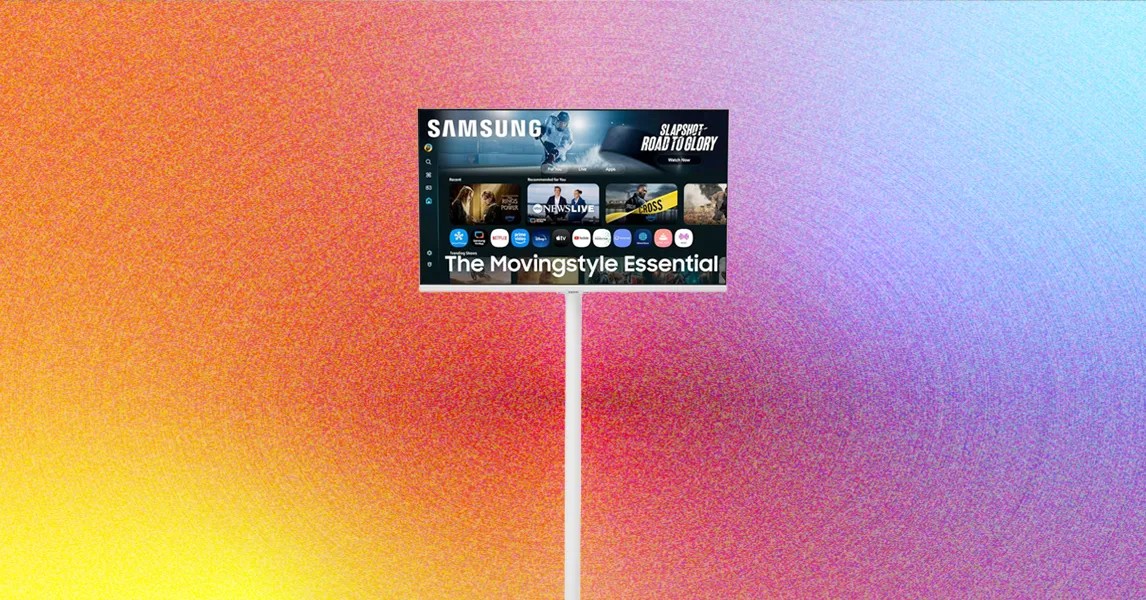
Then came the Samsung Movingstyle 32. A monitor on wheels. The idea clicked immediately. You want to watch a film in the kitchen? Wheel it there. Done. Put it in the closet when you’re done? Sure. No living room makeover required.
A screen you can park wherever life happens.
It isn’t a magic bullet. But for people like us? It’s close enough.
The Box Lies
The concept isn’t brand new. Hospitals use rolling screens. Conferences use rolling screens. But Samsung dressed it up as lifestyle furniture. Which is clever. Mostly because it’s actually a standard computer monitor slapped onto a specialized stand. Yes, it includes the original monitor stand too. In the box. Just in case you wanted to plug your rolling screen into a table. I didn’t. I’m sure you won’t either.
The box? Massive. Deceptive. You open it thinking maybe they shipped you a full-sized TV. Then you see the wheels. Five of them, actually, hidden underneath until you pull them out. Most of the weight is in the base. Needs to be. You’re lifting thirty-something pounds of glass on a stick. Physics doesn’t care about your design choices.
Setup was fast. A few screws. Snaking the power cord through the column. That handle for tilt and height? Dubious at best. You fiddle with it. You curse softly. You settle for “close enough.” It rotates. It tilts. Eight inches of vertical travel is fine if you sit anywhere reasonably human-shaped. I could see the screen fine from the couch. I could see it fine standing. That’s enough.
Moving it between floors? Impossible. We live in a townhome. Stairs exist. This device hates them. And don’t forget the power cable. 4 feet. 9 inches. Sounds okay until you realize you have to wheel a 32-inch display back and forth to hunt for outlets. Or plug into an extension cord that lies in the carpet. Tripping hazard pending.
Hardwood floors? It glides. Thin rug? Barely a stutter. Thick plush carpet? Forget it. But mostly it just moves. Quietly. Smoothly. It works.
Tizen Rules the Room
You don’t need a PC to use it. Samsung’s Tizen OS handles that part beautifully. It functions exactly like their Smart TVs. Which means Netflix, Hulu, Amazon Prime, the usual suspects. All accessible without plugging in a laptop. The UI is clean. Boring even, in a good way. Samsung TV Plus pops up occasionally—free channels, local news, sports if you’re lucky. It’s decent background noise.
Switching to HDMI from a PS5 or a Mac? Easy enough. The remote gets the job done. The interface doesn’t get in the way. Which is rare for computer monitors masquerading as TVs. Most choke here. Samsung didn’t.
Price wise? $580. That feels right. Affordable. Mainstream. Until you look closer at the panel itself. VA panel. Colors are fine. Saturation is… okay. Not vibrant. Brightness rated at 250 nits? Sure. Mine hit 310 with the meter. But sunlight hits your wall at noon and this screen goes dim and ghostly. Don’t expect HDR brilliance here.
Is it high quality? Debatable. You could buy a superior OLED panel for the same money. Faster refresh rate. Better blacks. More color depth. But that OLED stays on a desk. This thing moves.
Touchscreen? No. Missed opportunity. Imagine using your fingers to scroll through recipes while cooking. Or swiping through photos. The remote works. Fingers are often faster. But nope.
The Upgrade Trap
Samsung makes a bigger, better Movingstyle. The M7. Touchscreen enabled. 120Hz refresh rate for gamers who own a portable rig. Battery included so you aren’t tethered by cables. The only downside? It’s 27 inches. Lower resolution 1440p. And costs $1,200 for all the premium features. Ouch.
Why shrink the screen to add bells and whistles? Who knows. But for someone wanting 32 inches of 4K video, the cheaper option is the only real choice. Unless you really like spending twice the money for a smaller display.
LG tried this too. The Smart Monitor Swing. Same 32-inch size. Touch inputs. Costs $1,000 right in the middle. Neither option is perfect. Ideally Samsung would just sell the rolling stand alone. Then let you pair it with whichever monitor you actually like. That would fix a lot of things.
Maybe it will. Maybe they’ll figure out that modularity beats forced bundles. For now though. We roll the 32-inch screen to the living room. Watch a movie. Push it away.
Does it solve the TV problem? No.
It solves the “no room for a TV” problem. There’s a difference. I’m rolling with it anyway.