


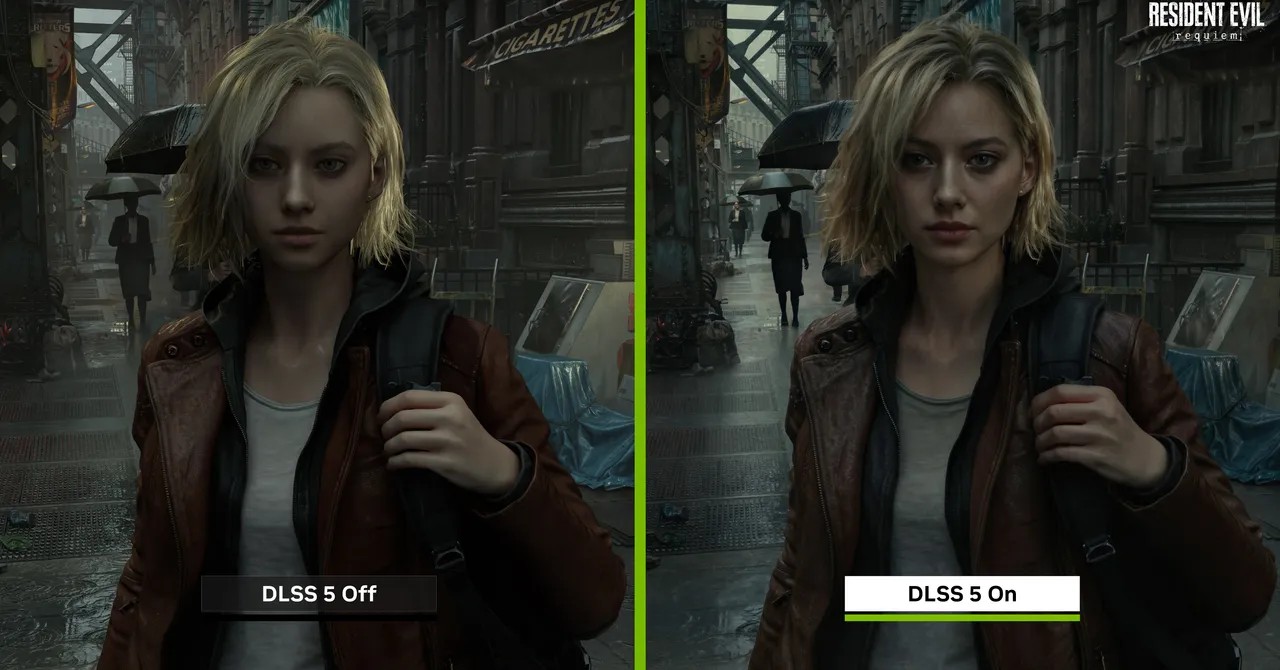
Nvidia’s recent unveiling of DLSS 5, its latest AI-powered upscaling technology, has been met with widespread criticism from both gamers and developers. Unlike previous versions focused on performance boosts, DLSS 5 aims to enhance visual realism – specifically, faces and details in games – through generative AI. The reaction has been overwhelmingly negative, with many describing the effect as unsettling and unwanted.
The Core Issue: Unsolicited Visual Changes
DLSS (Deep Learning Super Sampling) traditionally improves frame rates by rendering at lower resolutions and using AI to upscale the image. Newer iterations insert AI-generated frames to further enhance performance. DLSS 5, however, goes further by actively altering the visual appearance of characters and environments without explicit developer consent.
While users can disable the feature, the core concern is Nvidia imposing changes rather than providing a purely optional enhancement. This crossed a line for many, who feel it undermines artistic intent and player experience.
Developer Reactions: Surprise & Discomfort
The backlash isn’t limited to gamers. Multiple developers, including those from Capcom and Ubisoft, reportedly learned about the tech demo at the same time as the public. According to Insider Gaming, they were blindsided by the aggressive visual alterations showcased by Nvidia.
“It devalues an artist’s creativity…,” says James Brady, a video game artist, “All this takes away from the artist’s original design intent.” The concern is that AI-driven filters, likened to those found on Instagram or Snapchat, override carefully crafted art direction.
The “Yassification” Problem & Technical Artifacts
The demo itself has been widely criticized for introducing unwanted changes. Faces were made more detailed, sometimes to the point of being over-sexualized or unnatural. The term “yassified” quickly spread on social media to describe the overly smoothed and idealized appearances.
Beyond aesthetics, the technology also introduces technical issues, such as artifacts appearing in real-time gameplay. A notable example occurred in a FIFA demo, where a soccer ball displayed visual glitches.
Nvidia’s Response & The Bigger Picture
Despite the outcry, Nvidia CEO Jensen Huang dismissed the criticism, stating gamers are “completely wrong.” This defiant stance only fueled the controversy.
The situation raises broader questions about the role of AI in game development. If the tech is limited to high-end hardware – Nvidia’s demo ran on RTX 5090 cards – it risks exacerbating the divide between those who can afford the latest GPUs and those who cannot. Some argue that DLSS 5 would be more palatable if it focused on improving performance on older systems rather than pushing photorealistic details exclusively for top-tier hardware.
Ultimately, Nvidia’s DLSS 5 demo served as a demonstration of its AI capabilities, but it failed to resonate with its audience. The backlash underscores the tension between technological advancement and player agency, particularly when AI begins to reshape artistic vision without consent.


