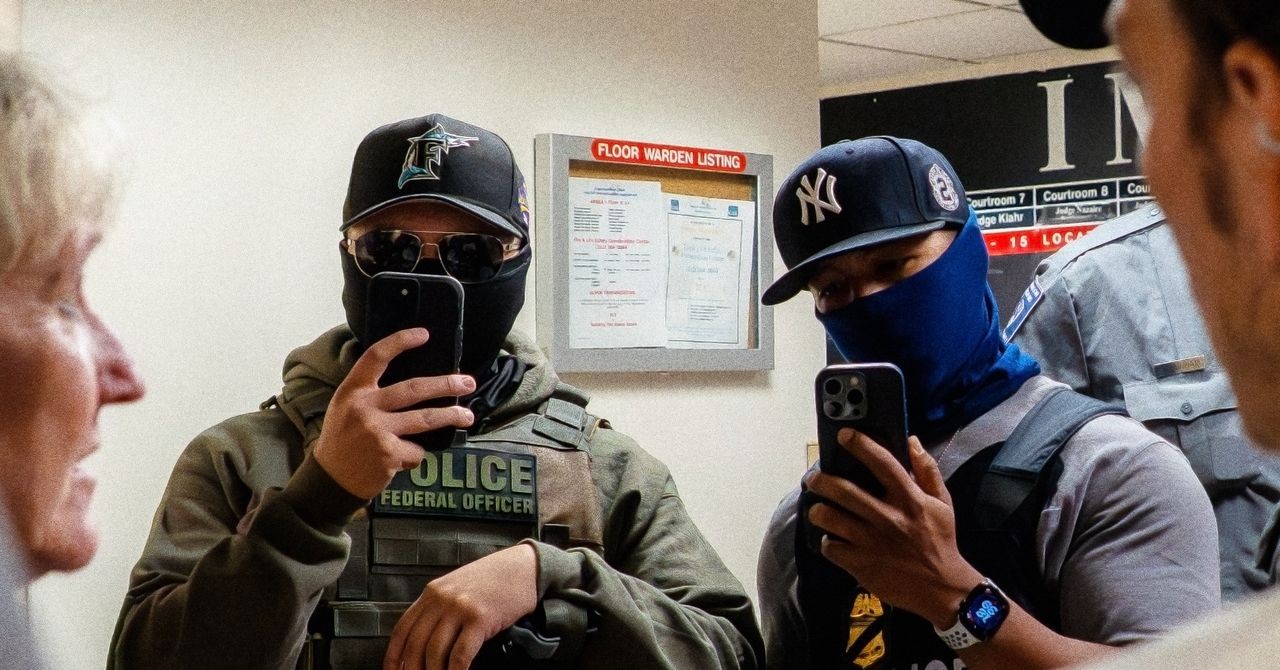
The Department of Homeland Security (DHS) has confirmed the operational deployment of Mobile Fortify, a facial recognition application used by Customs and Border Protection (CBP) and Immigration and Customs Enforcement (ICE). The app, developed in part by NEC, allows agents to identify individuals—including both documented and undocumented persons—in real-time using facial scans, contactless fingerprints, and scans of identity documents.
Key Facts:
- CBP activated Mobile Fortify in May 2024, with ICE gaining access in May 2025.
- The app is described as “high-impact” by both agencies, yet monitoring protocols are still under development for ICE.
- NEC, the primary vendor, holds a $23.9 million contract with DHS for biometric matching products with unlimited usage.
The app functions by capturing biometric data and submitting it to government systems for matches against existing records. ICE does not directly interact with the AI models themselves, instead relying on CBP’s systems. CBP has also used Trusted Traveler Program data—including TSA Precheck and Global Entry—to train, fine-tune, or evaluate the app’s performance.
Recent incidents suggest the app’s reach extends beyond immigration enforcement. One traveler had Global Entry privileges revoked after a federal agent mentioned “facial recognition,” and another was threatened with travel restrictions by an officer who stated, “Whoever is the registered owner [of this vehicle] is going to have a fun time trying to travel after this.”
The app’s deployment raises serious questions about surveillance, data privacy, and due process. Despite the app being labeled as “high-impact”, ICE admits that monitoring protocols are still being developed, violating OMB guidelines requiring impact assessments before deployment. Both DHS and ICE declined to comment on the matter, though CBP stated it would look into further inquiries.
The use of this technology underscores a broader trend towards increased biometric surveillance by federal agencies, with little transparency or accountability. The long-term implications for civil liberties and potential for misuse remain significant concerns.