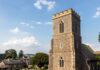
You don’t get a firm grasp on Thomas Malthus by looking at his later, grim predictions about overpopulation. You start with the pedigree. He wasn’t some autodidact scraping by in a garret. His education was rooted in the home until 1784, when he finally stepped through the doors of Jesus College, Cambridge.
The records are clear. He didn’t just show up. He studied a wide array of subjects. He won prizes in both Latin and Greek. That level of classical proficiency wasn’t decorative; it was a signal of sharp, disciplined intellect. He graduated in 1788 with his undergraduate degree.
But the real timeline accelerates after that.
By 1791, he had earned a Master of Arts. Two years later, in 1793, he was elected a fellow at Jesus College. Being a fellow wasn’t just a title. It was a position of academic authority and stability. Then came 1797. He took holy orders.
Why does this biographical detail matter? It strips away the myth of the solitary doomsayer. Malthus was deeply embedded in the institutional fabric of British academia and the church. His ideas didn’t emerge from the void. They were forged in an environment that valued classical rigor, theological structure, and social order.
The man who would later argue that population growth would inevitably outstrip food supply was first a product of elite education and ecclesiastical training. He understood systems. He understood constraints. And he understood the human tendency to reproduce.
This background shaped how he framed his arguments. Not as radical sociology. But as a natural law, akin to the principles of geometry he might have studied in his Cambridge days.
Does the source of an idea change its validity? Maybe not. But it certainly changes how we read it. Malthus wasn’t an outsider shouting at the gates. He was an insider, using the tools of his trade—logic, theology, and classical precedent—to analyze the mechanics of human survival.
The rest of his life, and the controversial essays that followed, were built on this foundation. A solid one. Rigid, perhaps. But undeniably structured.